Ok, let us be the first one to get all the bad jokes out there: Theatre has gone to the Dogs, Theatre gets put in the Doghouse, Dog Gone it Get me a Ticket – because Dachshund UN is coming to Harbourfront Centre next week. Frequent Praxis collaborator Margaret Evans played a key role in casting.
Looking for other theatre blogs considering pressing local issues? Umbrella Talks is up and running again with a series of new interviews with theatre artists. Just launched this summer, In The Green Room has also made a splash with multiple writers contributing to the site and a series called Stop, Start, Continue. Of course, don’t forget to check out Theatre Ontario’s Blog, which is a consistently updated resource for theatremakers.
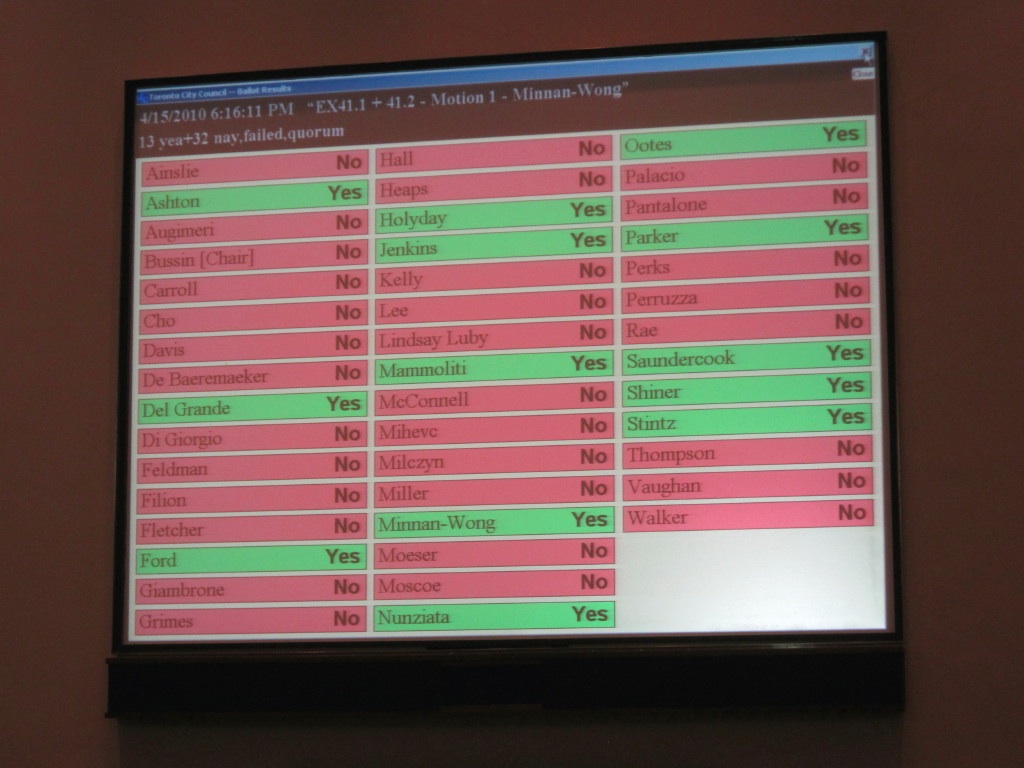
At 6:16:11 PM on April 16 2010, Toronto City Council approved a Billboard Tax. This led directly to the increase in arts funding in 2013.
In the world of federal arts funding, The Globe and Mail revealed most Canadians think the $30 Million spent promoting the War of 1812 was a waste. Conversely, they were disappointed The Harper Government didn’t spend more time celebrating actually important milestones like anniversaries of Women’s Suffrage and The Charter. No word yet on if there is a correlation between these Canadians and the ones The Toronto Star found had grown weary, “even hostile to”, Economic Action Plan advertisements.
The Montreal Theatre Awards are in the process of being invented. Anglophone theatre companies will have their own annual peer-juried awards, presented under the auspices of the Quebec Drama Federation. Right now they are picking the name of the award, which you can vote on in a Facebook poll.
Finally, in case you missed it, Necessary Angel announced Jennifer Tarver as their new Artistic Director and Factory Theatre announced Nina Lee Aquino and Nigel Shawn Williams as Co-Artistic Directors (no longer interim).
If you run a web-influenced theatre company for 10 years, you will accumulate some ridiculous photos.
Michael co-curated FreeFall ’12 at The Theatre Centre with AD Franco Boni, and spent seven months at The Shaw Festival, where he assistant directed Ragtime, Helen’s Necklace,A Man and Some Women and directed Brecht’s Senora Carrar’s Rifles. This fall, he returned to Toronto as an assistant director with The Electric Company at Canadian Stage and Associate Artist at Theatre Passe Muraille.
Aislinn produced a two-week festival of theatre for human rights with Aluna Theatre and five shows for other companies including Modern Times Stage Company’s production of The Lesson, and the electroacoustic opera Julie Sits Waiting with Fides Krucker. She also created online content for Liza Balkan’s Out The Window, and Michael Healey’s Proud.
Throughout the year, we wrote, hosted, curated and moderated a number of essential and vigorous conversations online at praxistheatre.com. Traffic from unique visitors is up 48% from 2011, and after beginning the year as Torontoist People to Watch in 2012, we finished up as an end-of-year pick by The Grid as a 2012 Toronto Theatre MVPs for providing “informed, well-reasoned debate… for the community of independent theatre artists in Toronto and beyond”.
In 2013, we’re moving to build upon these successes with live performances directly connected to online content:
Civil Debates
Debates Winter/Spring 2013
Civil Debates is a monthly series we are creating with The Theatre Centre that invites two speakers from opposite sides of an argument to debate their perspectives for and with a live audience.
It is also a forum for all attendees to participate and vote on who and what they agree with. We hope this will be an opportunity to extend the online community we have developed over the years in a face-to-face setting, bringing those conversations into a physical space.
The topics for the initial four debates will be curated via a gallery installation January 12 and 13 at The Next Stage Festival at Factory Theatre. Debates will take place monthly at The Theatre Centre at 1095 Queen St. W (Queen and Dovercourt) in February, March, April and May 2013. The First Debate is on Thursday, February 7th. Go put it in your book or iCal etc. right now.
Praxis 10th Anniversary Party
Party Summer 2013
Yes. Praxis Theatre has been around for 10 years!
Our first production, Eugene, a modern original adaptation of the epic poem Eugene Onegin, opened at The Theatre Centre in June 2003. Since then we have created 12 original plays, built a website and started combining the two.
Come join us for a big party we are throwing at a TBD location to celebrate. If you just know us online, this is the time to come out. If you have ever been to or been in a Praxis show, we hope you’ll come too. It seems crazy. For real. A DECADE.
Some details are still pending, but the production will be performed in several Canadian cities, including a new production for Toronto.
We’re pretty excited Tommy Taylor’s original adaptation of his Facebook note is our first show to tour, after ten years as a company. The damage done to civil liberties by the G20 Summit in Canada was a failure of all three levels of government. Thanks to the Toronto Arts Council, Ontario Arts Council and Canada Council for the Arts for their support.
Other Stuff We Don’t Know/Can’t Say Yet
? – What Else – ?
The great thing about being a small company with an adaptable communications structure is that we can take advantage of opportunities as they present themselves.
We have something we are working on with Videofag we hope to tell you about soon, there are probably some blog posts coming up, and other live events we will be involved with. We’ll let you know, just as soon as we know what they are.
Thanks to everyone who helped make 2012 a success. We feel really lucky to be making work that excites us with great people in 2013.
RaBIT is a grassroots initiative to change the way we vote in Toronto municipal elections to a ranked ballot.
Over the past five years, many places have switched to ranked balloting including San Francisco, Minneapolis, Memphis, Oakland and The Academy Awards. There are a number of benefits to this system, but two of the biggies are it ensures majority support and encourages a more positive political environment.
Viewed in this context, RaBIT is proposing a transformative adjustment to what politics is in Toronto. Gone would be talk of pushing lower profile candidates out of races to eliminate vote splitting, candidates would be respectful to opponents whose support they may need, and extreme candidates would have to convince a majority of voters their extreme ideas are attractive to win.
In the current first-past-the-post format that defines our voting system, none of this is possible. Divisional and oppositional wedge politics are the most effective route to power. Candidates are routinely elected with a majority of electors casting their ballots for other candidates who wanted different policies from the ones they support. I can understand how this ethos alienates a huge swath of people from engaging with politics.
So I’m going to the meeting this Monday to learn how to volunteer. There are a lot of problems in Toronto and issues I would like to put my energy into, but you have to pick your battles and this one seems like it could have some far-reaching consequences for many future administrations. The RaBIT team has done a great job to get this issue on the public agenda and taken seriously by city councillors and themedia. Now is the time to push for this – and there is no substitute for a well-organized group of passionate citizens. As of publication there were already 90 confirmed attendees on the Facebook.
(l-r) Adam Wilson, Ava Jane Markus and Maev Beaty are directed by Mitchell Cushman in the SummerWorks darling turned Mirvish hit Terminus
by Michael Wheeler
I haven’t seen Terminus yet – going with my Mom next week. I don’t want that to stop me from writing about it here though, as we don’t do reviews in this space in any case.
It bears mentioning though that local indie theatre has created a genuine artistic and commercial hit, and that this comes in the form of Terminus. The production is the first show in a pretty big risk Mirvish is taking with their new indie-focused, Off-Mirvish season.
One of our most read and commented discussions this year was, Mirvish Blows Up Downtown Theatre in which I argued that A) A Mirvish interest in regularly and commercially producing the work of indie artists could be significant in an awesome way and B) the Mirvish re-development on King St had the potential to bring a net benefit to Torontonians and theatregoers if it included a smaller venue than the Princess of Wales, which will be demolished.
Since that post, The Off-Mirvish season has probably gone even better than anyone at Mirvish or their indie partner Outside The March could have imagined. It has receivedstunningreviews, social media buzz is at a fevered pitch and shows are selling out. Hope you don’t want to go this weekend Friday – as tickets are not available.
Anyone who has paid a casual interest in our industry knows it has been tough times as of late. Theatres are closing, deficits have been posted, boards are overstepping their mandate – questions of relevancy abound. To see a potential upswing, a positive sign that artist-driven independent work is viable and can excite not just our own community, but the city at large, is worth noting. Not only can this thing get turned around, we’re the ones who can do it.
Certainly there is value in much of the other work our community creates that is not commercially focused. God knows I wouldn’t be running this company with Aislinn and making this work if I didn’t think so, but what gives theatre its intrinsic value isn’t really what is at stake here. Theatre will always exist and address core questions of humanity as long as humans can get together somewhere. What’s at stake here is establishing a viable sustainable professionalized urban theatre industry.
If you remove the artists who work at our major non-urban festivals, that is something we don’t have in Toronto currently. Those artists that do work regularly here almost all have secondary focuses. By creating a regular link between independently produced and created work and commercial theatre, Mirvish threatens to redefine this paradigm. Not because we will work on Mirvish shows, but because it has the potential to reignite interest from audiences and other producers in what we do.
So hats off to Outside The March Artistic Director and recent Praxis blog writer Mitchell Cushman. We all really needed this to go well coming out of the gate, and you are passing off the baton with an early lead.
This Onion Talk reveals some of the aspects we won’t be looking at in the workshop.
by Michael Wheeler,
Next week I am leading a workshop with Theatre Ontario on online tools and how they can complement and integrate with live performance. It is designed to be useful to staff at arts organizations as well as artists interested in these ideas and concepts . You know how they say spots are limited and filling up fast? This is also true in this instance.
Looking at examples from work with The Electric Company, Volcano Theatre, The Shaw Festival, The Theatre Centre, Praxis Theatre and The Wrecking Ball, this workshop investigates imaginative expression and best practices in performing arts and online integration.
Praxis Workshop @ Social Media Week 2012
Questions the workshop poses:
Where does your social media content come from?
What ‘voice’ should you use to represent your work or organization online?
What’s the latest with live-blogging and live-tweeting?
How can online tools and presence assist instead of distract from the work?
Participants will emerge with:
A better idea of your relationship to social media
A clearer idea of what approach to social media is right for you.
Information to inform your social media strategy.
Ideas for social media content and where to look for/create them.
A better understanding of trends and developments.
HASHTAG: #THEATREON WHERE: 215 Spadina Avenue, Suite 210. Toronto WHEN: Tuesday November 27, 6:30pm to 8:30pm RSVP:Theatre Ontario Registration
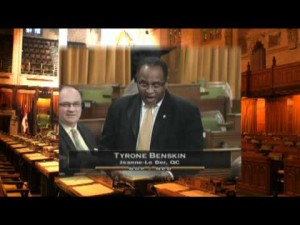
Yesterday, Bill C-427 came up for second reading in Parliament. A private member’s bill proposed by the NDP’s Tyrone Benskin (previous Artistic Director of Montreal’s Black Theatre Workshop), Bill C-427 was an Act to amend the Income Tax Act to allow income averaging for artists.
The tax codes in Britain, Germany, The Netherlands and France have all made similar adjustments to encourage cultural production by independent producers. Corporate tax rates has been lowered by one third (22% to 15%) since Harper took power. Certainly cultural tax rates could be amended to reflect a level playing field. Unfortunately the Conservative Government couldn’t appreciate the value of a tax code that allowed entrepreneurs in cultural industries to be taxed at competitive rates with international trading partners and competitors.
Due to the irregular hours and inconsistent incomes frequently associated with their work, artists are nearly always disadvantaged both by punitively high taxation during years of high earning and by virtue of their ineligibility for a number of Federal programs such as Employment Insurance (EI), the Canada Pension Plan (CPP) and others. C-427 will begin to level the playing field by allowing them to average their income over an elective period, achieving considerable tax savings over two to five years.
The critique of the Bill was presented in a recent Globe and Mail op-ed by Kevin Milligan, which levels three charges against income averaging: 1) Last time we tried it was complicated. 2) Last time there were more tax brackets. 3) Last time tax rates were higher.
These reasons not to act to support Canadian culture through a fair tax structure, frankly, are awful. They can be summarized by two statements: “Why do you guys want to make everything so complicated?” and “Come on guys, it’s not so bad.” None of these standards are applied to corporate interests in the myriad of ways they have been accommodated and caressed by the government. They are not particularly compelling as arguments go either: Even meagre savings, when you are living on the poverty-level income of many artists, would be significant.
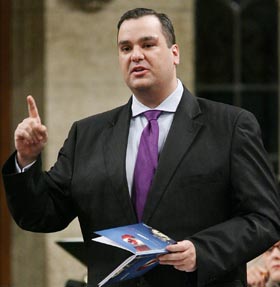
Heritage Minister spoke and voted against C-427
When the Minister was asked if he would support the bill for Second Reading yesterday, he said he would not. Moore listed new museums, programs and a recent visit by members of The Canadian Arts Coalition as signs the government was doing a great job with culture. He did not address at any time the financial realities of being an artist or the particulars of the bill, preferring to recite the institutionally-based initiatives he controls the funding for. He did not address why the government won’t support a tax system that allows our cultural workers to compete on a level playing field.
If the Harper Government doesn’t want to work to support culture and the economic paradigm that defines it, that’s cool. We kind of knew it all along. Let’s not pretend this was a decision made out of anything but partisan interest however. This bill would have made a major impact on the viability of being an artist in Canada. It begs the question whether culture not tied to The War of 1812, or the major institutions it controls, is something this government wants to encourage.
There are two upcoming events I am organizing that emphasize conversation and online interactivity in a performative context. You are invited!
One is free and includes lunch – the other is very reasonably priced and perhaps you work for an organization that has a budget for there types of things anyhow…
1 Working with The Theatre Centre to create an interactive and friendly space to engage in dialogue surrounding TEDx Toronto: an independently-organized, one-day conference, designed to give communities, individuals and organizations an opportunity to stimulate meaningful exchange. TEDTalks bring top minds from technology, entertainment and design together to share ideas, inspire movements and ignite change.
This year’s TEDx Toronto is on October 26th, 9am-5pm and The Theatre Centre will be hosting a Live Viewing Party at the POP-UP. Join us as we live-stream the conference, bringing the TED experience to you by providing an opportunity to engage with other viewers and share ideas online and in-person.
This event is FREE and lunch will be provided – BUT you have to RSVP if you’re going to be there around lunchtime (so we know how much food to get):
HASHTAGS: #TEDxToronto for city-wide conversation & #TEDxTOTC for location specific conversation.
WHERE: The Theatre Centre POP-UP @1095 Queen West
WHEN: Friday, October 26, 9-5pm
RSVP: Viewing party RSVP form(please select The Theatre Centre POP-UP from the list of locations at the bottom of the page)
Praxis Workshop @ Fringe Creation Lab for Social Media Week 2012
Looking at examples from work with The Electric Company, Volcano Theatre, The Shaw Festival, The Theatre Centre, Praxis Theatre and The Wrecking Ball, this workshop investigates imaginative expression and best practices in performing arts and online integration.
Questions the workshop poses:
Where does your social media content come from?
What ‘voice’ should you use to represent your organization online?
What’s the latest with live-blogging / live-tweeting?
How can online tools and presence assist instead of distract from the work?
Participants will emerge with:
A better idea of your organization’s potential relationship to social media
A clearer idea of which social media is right for your organization
Information to inform your social media strategy
Ideas for social media content and where to look for them
A better understanding of trends and developments in social media
HASHTAG: #THEATREON WHERE: 215 Spadina Avenue, Suite 210. Toronto WHEN: Tuesday November 27, 6:30pm to 8:30pm RSVP:Theatre Ontario Registration
Doc Wuthergloom wants you to avoid your inevitable destruction at the demonic hands of the vile phantoms, which plague your soul unseen – by clicking here!
by Michael Wheeler
Surprise! The theatrosphere has been a busy place with a number of interesting conversations to take note of:
The Canada Council is launching “a dialogue about how the arts bring value to the lives of Canadians”. Vice Chair, and No Culture, No Future author Simon Brault has written a blog post about this policy initiative titled, “Arts For All!.
U of T Prof Holger Syme continues to put out complex posts that challenge conventional wisdom driving TO theatre. In his post “Theatre does not tell Stories” he summarizes his critique as, “theatre can’t tell stories, because stories are always necessarily retrospective. And theatre isn’t about the past. It’s about the present.
Howard Shalwitz speaks on theatrical innovation
Meanwhile Theatre Passe Muraille Artistic Director Andy McKim was on to a similar critique of contemporary drama when he reblogged (with an intro) a speech by Woolly Mammoth Artistic Director Howard Shalwitz at theat the TCG American Theatre annual AGM titled Theatrical Innovation: Whose Job Is It? Core takeaway: innovation in North American theatre is way behind what’s going on in Europe and it is hurting the art form, which is attached to outdated models. Time to move off the ‘assembly line’ of play creation and into a laboratory in which collaborators reinvent the medium.
Luminato AD Jorn Weisbrodt has started blogging on the festival’s website. His post titled Postcards from the Pool documents an exclusive trip he and husband Rufus Wainright took to the Hearst Castle where the newlyweds recieved VIP treatment while lounging poolside – complete with shirtless photos! In the post he reflects on his good luck to recieve an invitation to stay overnight in a period where the castle was closed to tourists. Weisbrodt was able to experience, “Hearst’s overwhelming vision, his desire to change reality and make this place the greatest private residence in the world.”
Vancouver affordable housing zoning
My recent post Mirvish blows up downtown Toronto theatre, argued that the Mirvish/Gehry re-development on King St. could be a good thing if it included a 500-seat venue and mixed-income housing. Globe critic Kelly Nestruck and National Post Political Journalist Jonathan Goldsbiebothwrote in support of a smaller venue recently, while The Grid’s Edward Keenan came out in support of inclusionary zoning, noting it is already the law in places like Vancouver and San Francisco.
Tear The Curtain has undergone some minor rewrites. (Dawn Petten & Jonathan Young)
by Michael Wheeler
After one week of intense tech, Tear The Curtain! will open to a sold out Bluma Appel Theatre tonight.
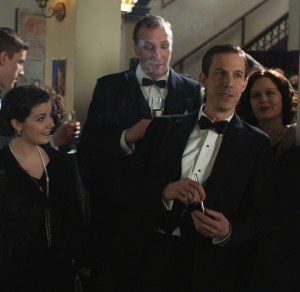
Like lead character Alex Braithewaite, the show has been taken apart and put back together again to find the best way to Tear The Curtain! This new version of the show has a number of small differences that separate it from the 2010 Vancouver one at The Arts Club. Tiny re-writes and re-edits means it is tighter, cleaner and has a more straightforward narrative without sacrificing any of the layers of medium that also contribute to the story.
Laura Mennell as Mila Brook
Tech-wise, the show has gone from projecting two 4500 lumens projections on top of each other, to one massive 10000 lumens projector to fire video from. Beyond the benefit of one projector being less nerve-wracking from a technical standpoint, it also means the colour and richness of the projected image is more consistent throughout the surface area (and there are several) that it projects on.
It’s been an intense process with flys to be timed, new lighting cues to be built, new wireless mic levels to be set and managed, new timing for entrances and exits and as well as a cast member with food poisoning, a dress rehearsal for an audience of educators and a preview that was the first ever Sunday matinee at Canadian Stage that I can ever remember.
Goodbye Monday night shows that never got a decent house, hello busy Sunday afternoon theatre on Front St.
Anyhow, this is a quick run people: 2 weeks! That’s it and it will be gone. Click here to figure out how and when to come see the film noir film/theatre hybrid Kim Collier and The Electric Company invented for the Cultural Olympiad in 2010 and has been taken apart and re-assembled for Toronto in 2012.
Two years ago, as part of a Canada Council-supported Director in Training residency at The Tarragon Theatre, I was shipped out to Vancouver to learn more about how the technical aspects of theatre-making were being approached out West. I was paired with The Electric Company, where I became assistant to director Kim Collier while we were shooting the film sections of an in-progress theatre/film hybrid. (During The Olympics!)
My film scene has been cut from the 2012 production!
I pretty much immediately fell in love with the company/production/script and so I was thrilled when they asked me to come back and continue as Assistant to The Director for the rehearsal process at Progress Lab leading up to opening night at The Arts Club’s Stanley Theatre in September 2010.
Two years later the production is coming to Toronto as the opening production of The Canadian Stage season at The Bluma Appel Theatre and really, I am quite excited. This super-cool medium-bending production I was a part of that none of my friends and colleagues have seen is finally coming here.
Even better, I will be joining the production when it moves into the theatre to begin teching into the space.
I’m hoping that my experience as assistant director on Peggy Pickit Sees The Face of God in The Bluma Appel last year, combined with my knowledge of Tear The Curtain when we put it together originally will make me useful. The cast is rehearsing in Vancouver first, so I will be playing catch-up. If nothing else, I can still hopefully provide some interesting online updates.
“After the years and years of weaker and waterier imitations, we now find ourselves rejecting the very notion of a holy stage. It is not the fault of the holy that it has become a middle-class weapon to keep the children good.”


















Recent Comments