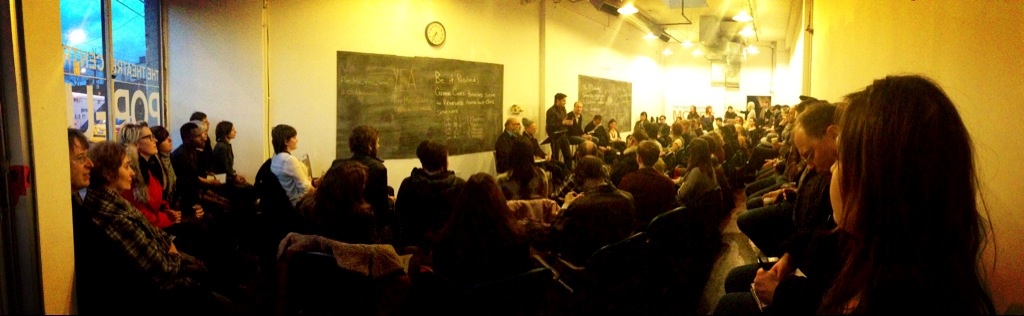
Frequent Praxis Theatre and Theatre Centre collaborator Laura Nanni is working with The Banff Centre to host a live screening of Civil Debates 4 – Climate Change.
We’re thrilled to expand the reach of the conversation across the country. Civil Debates will be working with Laura to ensure a few of the tweets that come in from Banff will be included in the “Questions from the Floor” section of the debate.
Monday December 14, 730PM EST / 530PM MST
IN BANFF
Jeanne and Peter Lougheed Building @ The Banff Centre, Room 204
A carbon-based economy is destroying life on the planet. Therefore:
Be It Resolved That it is unethical for arts organizations to accept funds from corporations causing this destruction and these revenue sources should be phased out.
Debate Format
Side A1 10 minutes
Side B1 10 minutes
Side A2 10 minutes
Side B2 13 minutes
Side A1 3 minutes
Questions from Floor: 25 Minutes
Audience Participation:
Following the debate, the floor will be opened to 2-minute comments or questions from the floor. If a question is directed at a debater, that person will have 2 minutes to answer. This will last 25 minutes maximum.
Attendees will be asked to register their opinion on their way in and out by secret ballot – to see if the debate shifted informed thought.
As always, and as the name implies, these debates will be civil and we invite apply your friendly intellect to a rigorous discussion of complex ideas.
Why We Started Civil Debates
Co-produced by Praxis Theatre and The Theatre Centre, Civil Debates was originally launched in 2013 as an opportunity to extend the online community Praxis Theatre had developed over the years via praxistheatre.com. Within a face-to-face setting, we worked to bring those conversations into a physical space. We were enthused and encouraged by the intelligent and civil discourse that had developed online, particularly in the comments of posts about hot button issues.
We began to think that – as theatre companies – we should be doing this live in a space with human bodies.
And so, building on the success of our three previous debates on Creative Cities, Arts Boards and Idle No More – Praxis Theatre and The Theatre Centre’s Civil Debates returns at conclusion of the United Nations Climate Change Conference in Paris with a debate on the ethics of receiving arts funding from drivers of climate change.
Monday December 14, 730PM @ Theatre Centre, 1115 Queen Street West
Admission PWYW (Pay What You Want)
Co-produced by Praxis Theatre and The Theatre Centre, Civil Debates was originally launched in 2013 as an opportunity to extend the online community Praxis Theatre had developed over the years via praxistheatre.com. Within a face-to-face setting, we worked to bring those conversations into a physical space. We were enthused and encouraged by the intelligent and civil discourse that had developed online, particularly in the comments of posts about hot button issues.
We began to think that – as theatre companies – we should be doing this live in a space with human bodies.
And so, building on the success of our three previous debates on Creative Cities, Arts Boards and Idle No More – Praxis Theatre and The Theatre Centre’s Civil Debates returns during the United Nations Climate Change Conference in Paris with a debate on the ethics of receiving arts funding from drivers of climate change.
The Resolution:
A carbon-based economy is destroying life on the planet. Therefore:
Be It Resolved That it is unethical for arts organizations to accept funds from corporations causing this destruction and these revenue sources should be phased out.
Moderator:
Jason Ryle is the Executive Director at the imagineNATIVE Film + Media Arts Festival. Jason oversees all aspects of the organization including programming, operations, finance, and the annual Festival. He sits on the Board of Directors for Vtape, an independent video distributor, and is a script reader for The Harold Greenberg Fund, which provides financial aid to Canadian filmmakers. As an award-winning writer, Jason has written for the Smithsonian Institution and numerous publications throughout North America. He made his first short film in 2005 and has been programming alongside imagineNATIVE’s Programming Team since 2002.
Arguing for the resolution (Side A):
Tommy Taylor is a Toronto based theatre artist, activist and fundraiser born and living in Toronto, ON. Recently, Tommy was the Green Party Candidate for Scarborough Southwest in the 2015 Federal Election. In 2013, he toured his award-winning, one-man show about his experience being arrested and detained at the 2010 Toronto G20 Summit, You Should Have Stayed Home: A G20 Romp!, across Canada. As a fundraiser Tommy has worked on behalf of multiple organizations including the UN Refugee Agency, Amnesty International as well as various political and environmental advocacy groups.
Andrea Houston is a Toronto journalist and human rights advocate, who has covered a range of issues affecting LGBT people on local, provincial, national and international levels. Andrea is perhaps best known for breaking the 2011 story that Ontario Catholic schools prohibited students from forming gay-straight alliances (GSA) clubs. Her reporting played a key role in the passage of provincial legislation that mandated all publicly funded schools be required to allow GSAs if students want them. In 2012, she was named Honoured Dyke by Pride Toronto. Andrea co-founded #ENDhatelaws, a coalition fighting for an end to international anti-gay laws enforced in more than 80 countries. Most recently, Andrea is executive assistant to Ontario’s first LGBTQ critic, MPP Cheri DiNovo, working on legislation to make the province safer and more accepting for queer and trans people. In June 2015, Bill 77 passed in the Ontario legislature, banning so-called conversion therapy for LGBTQ youth.
Arguing against the resolution (Side B):
Maggie MacDonald is an artist, writer and environmental activist. Her recent theatre works include Young Drones, a rock opera created with The Bicycles and artist Amy Siegel (SummerWorks Performance Festival, 2014), and the space comedy No One Receiving (Rhubarb Festival, Buddies in Bad Times Theatre, 2014). She is also co-creator of musicals Paper Laced with Gold (HATCH 2012), and The Rat King (Lucille Lortel Theatre, NY, 2007). She is a Fellow of the Royal Society of Arts (UK), an alumnus of the 2012 Governor General’s Canadian Leadership Conference, and was a finalist for the 2014 Toronto Arts Foundation Mayor’s Award for Best Emerging Artist. She is also a campaigner specializing in research and advocacy against endocrine disrupting chemicals and environmental causes of cancer. On twitter: http://twitter.com/MacDonaldMaggie
MichaelHealey is a playwright and actor. His plays include Kicked, Rune Arlidge, Proud, The Drawer Boy, Courageous, and Plan B. 1979, a play about former prime minister Joe Clark, is set for production in 2017.
Debate Format
Side A1 10 minutes
Side B1 10 minutes
Side A2 10 minutes
Side B2 13 minutes
Side A1 3 minutes
Questions from Floor: 25 Minutes
Audience Participation:
Following the debate, the floor will be opened to 2-minute comments or questions from the floor. If a question is directed at a debater, that person will have 2 minutes to answer. This will last 25 minutes maximum.
Attendees will be asked to register their opinion on their way in and out by secret ballot – to see if the debate shifted informed thought.
As always, and as the name implies, these debates will be civil and we invite apply your friendly intellect to a rigorous discussion of complex ideas.
Monday December 14, 730PM @ Theatre Centre, 1115 Queen Street West
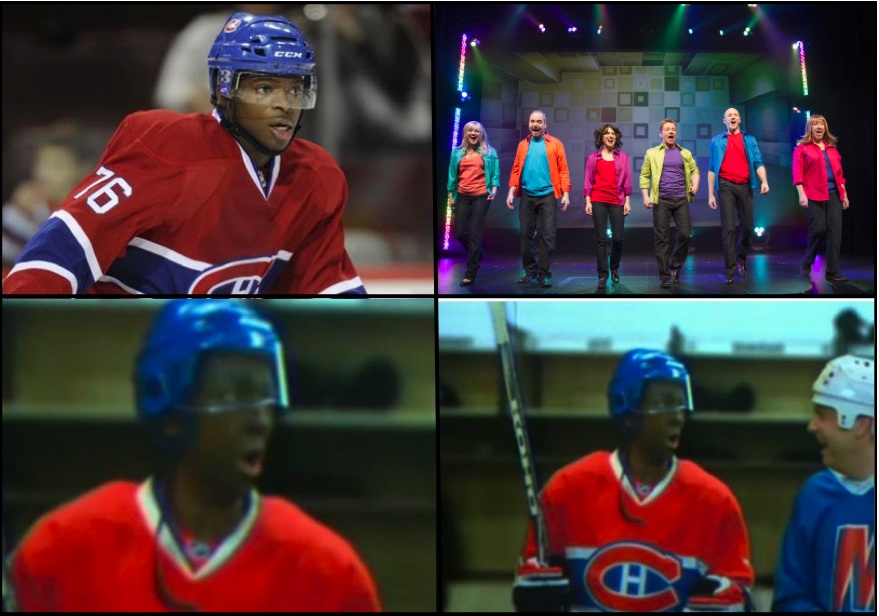
Last night, my friend/colleague and I went to see Théâtre du Rideau Vert’s annual offering of Revue et Corrigée which “parodies” Québec-centric politics, figure heads, celebrities, media, displayed through a mix of both live performance and video sketches. I went. I knew why I was going. I had gone because in one sketch, it was told, featured one of the performers “aping” PK Subban with Habs uniform and blackface.
I had gone because there was apparent backlash from this through various media outlets, and suddenly the theatre company I work at was being forced to make a statement of sorts. My colleague – with good reason – believed in order to make any statement, we should see it. He was right. But I was flooding through every excuse in my brain as to how I could bail, knowing that I was going to walk into something I wasn’t sure of how I would absorb. Why deliberately put yourself through that? Am I supporting by being a bum in seat – making the theatre look even fuller? Why? I had already read the Montreal Gazette’s article, I had read le Voir’s article…
In front of the theatre, there were buses, BUSES of people seeing this show.
When we got there, I knew we were being deliberate, that we were being investigative. In my heart, I really just didn’t want to see what everyone was talking about. I really just didn’t want to be there.
Not because I would be surprised. But because…I wouldn’t be surprised. The two of us were the only people of colour in the 400+ seat theatre. The theatre did not intend on including us.
At the top of the second act, after the Ginette Reno spoof, on the big screen, two actors appeared: both White performers dressed in Habs gear sitting on a locker room bench, one in full blackface to portray PK Subban. When the 45-second sketch was done, my friend and I removed ourselves from the theatre.
I’m confused. Taken aback, hurt. I feel deep shame and anger. I am an alien within my geographic community and I embody the knowledge of not belonging to an arts landscape that is in my own stomping grounds. Where I live, where I work, where I walk every day.
I will not be naïve and pretend that this has not been an issue in the Québec franco-theatre community for a while in terms of content and hiring practice. It has. It trickles into the English side too. The thing I’m frightened of is that in doing this, in an arena of expression, freedom of speech, etc, they were NOT deliberate. Rideau Vert was not trying to be political or make a statement or anything that could suggest a modicum of thought. What’s worse is that this was a non-issue for them. They were surprised that they received backlash. By demonstrating laziness in their work, they were overtly smug, arrogant and entirely racist.
This show opened on November 25th, there was an article released a week later denoting the inappropriate and highly offensive material – may I remind you that there were BUSES – and others followed. But rather than Rideau Vert taking this into consideration, they decided to keep the video sketch in. That was their response and their choice – after four weeks of this. It has been extended to January 10th.
However, I can’t be the one to “get over this” anymore, or to think that I’m being too sensitive. Because when I start to think these things, people and theatres like Rideau Vert get another notch on their belt for not having to deal with the consequences of their words and work.
As arts practitioners, we have control over what messages, stories, thoughts, people, faces, psychologies, ideals, philosophies we wish our audiences to take from our work. We are active in that. We must be. We cannot be complacent, nor can we accept absolute intolerance or ignorance. It is a bad excuse; it is only inhumane, filthy, oppressive, and unabashedly unsympathetic.
I know that I am not welcome in their theatre. That is the clearest message they sent to me.
Mike Payette is a Montréal-based actor and director and has worked on some of Canada’s greatest stages from coast to coast. He is co-founder and Artistic Director of Tableau D’Hôte Theatre, Assistant Artistic Director of Black Theatre Workshop and a founding member of Metachroma Theatre.
If you are an artist living and working in Toronto, the Artists’ Health Alliance is a resource you need to know about.
Here are the top three things we think you should know:
1. We are partners in health with the Al & Malka Green Artists’ Health Centre at Toronto Western Hospital
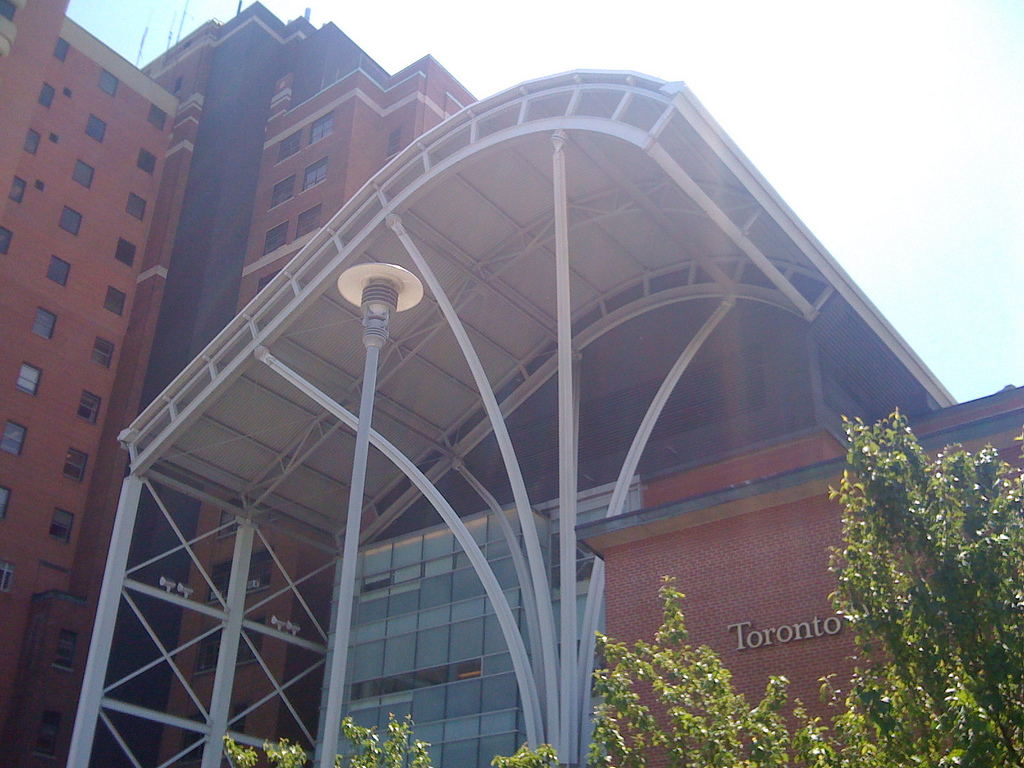
The Al & Malka Green Artists’ Health Centre (or “the Centre”) is just for artists like you. Because of the physical and mental demands of your work, we know that you have unique health needs. Just as sports medicine treats athletes, the Centre treats artists.
There is no other clinic in Canada that offers holistic, integrated care to professional artists. It’s truly a one of a kind space, and is even equipped with an Acoustic Studio, and a Movement Assessment Studio with a sprung floor and video equipment to aid in diagnosis and treatment.
To check out a full list of services available at the Centre, click here.
2. We offer financial support through the Joysanne Sidimus Subsidy Fund
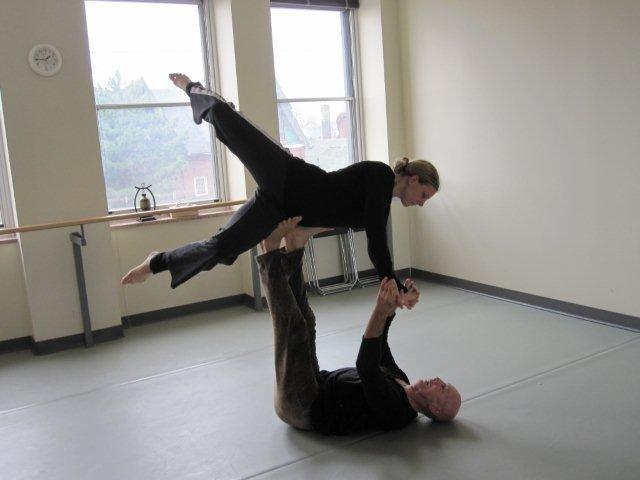
Movement Assessment Studio at the Al & Malka Green Artists’ Health Centre
Let’s face it: if you’re an artist, you’re generally not in it for the money. It can be challenging just to make ends meet on an artists’ income, let alone be able to afford health care services like physiotherapy, massage or psychotherapy. But without access to these specialized treatments, your ability to keep creating can suffer.
The Artists’ Health Alliance manages the Joysanne Sidimus Subsidy Fund to help cover the cost of treatments at the Centre that are not covered by OHIP. We will cover 75% of the cost so you can give 100% to your art!
3. We offer Workshop Programming & Educational Outreach
Our workshop season runs from September to June and is designed to address the specific needs of artists. These workshops cover a variety of topics such as Keeping Your Hands Healthy, learning Alexander Technique or Managing Stress with Self-Shiatsu. Workshops and are typically in the range of $20 – $25 per class!
This year we have implemented Early Bird Registration that will save you $5 on any workshop you sign up for two weeks prior to the workshop date!
To check out our full list of programming, click here.
Left to Right: Aislinn Rose, Praxis Artistic Producer and Bunker Producer; Michael Wheeler, Praxis Artistic Director; Carly Chamberlain & Tanya Rintoul, NTS Directing Students.
This week we have been studying Social Design for directors at The National Theatre School. Social media as a tool for discussion eventually (immediately) brought us to the ongoing controversy surrounding when critics are invited to Opening Night at Factory Theatre. We asked Aislinn to have a google chat with us about it as she is the producer of the first show in the Factory Theatre season: The Art of Building a Bunker.
Ok so i got my invite to
The Art of Building a Bunker Opening today
You’re welcome.
Thanks!
How did you pick the guest list?
Well, it was a collective effort, given that this production is a partnership between Factory and Quiptake.
Essentially, we each created a list and then mashed them together. (Lots of duplicates of course.)
On our list, I specifically wanted to invite people who had spoken publicly about the SummerWorks productions, even if it was “I still don’t know how I feel about this show”.
Carly, Tanya and I have been talking about Social Design all week.
The controversy over who got to come (or more accurately is invited) to opening ended up being part of what we talked about
Due to it starting on social media
I hadn’t noticed.
lolz
heeehee
group laugh
At least some people are laughing about it. Phew.
i was curious about the thought process you had before entering into that HUGE Twitter discussion. Did you imagine it turning into such a big discussion, or were you just simply responding how you felt in the moment?
Ah, yes, to respond or not to respond. (I actually had to walk away from my desk today rather than comment on something.)
I saw what I thought was an unfair comment about something (and a comment I found rather flippant, about a decision that wasn’t made flippantly) and so I decided to respond. I certainly didn’t think it would become my next five days.
That actually leads into what we’ve been curious about, which is why/how/when the original decision was made.
There was a great meeting of representatives of all the companies who are part of the Factory season (except Ronnie, who’s on tour). It was an opportunity for all of us to get together, introduce ourselves, hear a little about what they had in mind for the next several months, and also pick our brains. Essentially we were in a room to say “we are the Factory season”. I thought it was a great idea.
At that meeting, the idea of a “new” kind of opening night was introduced. Nina said she was interested in changing what opening were about and who they were for.
It came down to wanting opening nights to be a great fucking night for the artists, and (as I put it) an opportunity for Adam, in the case of Bunker, to stand in front of an audience of peers, of fellow artists, of friends, family, people he admires, etc. to say “this is my show, I wanted to share it with you first”. It wasn’t going to be about impressing the critics you know are all sitting there with press kits on their laps.
And, you know, we’ve ALL heard critics complain that openings aren’t great opportunities to feel the real show anyway, because of the audience being stacked with friends.
i prefer press kits to be a USB now.
(You know I do too Mike. Or a link even.)
We didn’t think it would be a big deal.
Sorry…but…is that really what the artists felt like those nights were? My impression from my own experience has always been that openings were a big industry love fest night
Sure, there’s the love fest… but there’s always also been the stress of who’s out there.
There’s a reason many actors don’t want to be told when press are in the audience.
Here’s where I struggle with this and it has already been discussed a bit – separating critics from community
I mean i get it – the first rule of praxistheatre.com was no reviews
and it is a good rule Mike
so i understand how a critical voice changes a dynamic
But lets take Nestruck for example
He was a critic at McGill when i was an undergrad
He was a crtic at Fringe in my 20s
Now he’s a critic in our professional theatre
I can’t really imagine him as not part of the community,
(even when he torches one of our shows)
He IS a part of the community. But I see the community a venn diagram.
So while he a part of the community, he is also apart from the community, and necessarily so.
Right, but why make it about the exclusion of critics rather than making a separate community celebration if that is the goal?
I thought that’s what we did… but we didn’t call it community night.
We called it our opening.
And then Media Night was created, to coincide with subscriber night, to give critics the opportunity to see the work with a regular ticket-buying audience.
And part of the reason it was scheduled for a Tuesday was that it was thought Tuesday would be a great night to be able to get the press there together (because Tuesday isn’t such a busy night).
I also wouldn’t use the term “exclusion” of the critics.
It is really great to hear (read) this with such clarity, the press release and other media surrounding this topic have not come across so reasonably.
Hurray for clarity! (And thanks.)
I argue with the exclusion part though. Not inviting someone to any event is excluding them from the event
Well, some parties are family reunions, and some parties aren’t.
There was the notion of wanting to slightly delay the entry of the “official” critical voices into the conversations happening around the show.
this is a bad metphor
its an ecology not a family
we dont have to like eachother but we all have roles to fill
what kind of conversation do you imagine happening by adding this delay?
I want to point out the fact that Kelly himself has accused other critics/bloggers of becoming “too embedded” when they’ve disagreed with him on this issue.
@KarenFricker2 Timeliness, independence, relevance… You’ve embedded too far, Karen. How could this possibly be beneficial to our readers?
So he, too, seems to understand that he’s part of the community… but that he can’t become too embedded.
Okay, back to the conversations…
We talked about how – sometimes – public conversations can become limited once the voice of “authority” enters the picture. And, as I’ve mentioned to people online, I don’t use the word “authority” because it’s accurate, but because that’s sometimes how it is perceived: that mainstream media (MSM) are the voice of authority.
This situation alone has shown me again that people are reluctant to join a public conversation if it goes against something the critics are talking about.
But in what forum would these conversations be taking place? (I’m on board with the idea of this “voice of authory”, but without providing a space for people to discuss, I’m skeptical about what critical discourse is going to happen on twitter…etc)
Yes and Holger Syme has already pointed this out, but the conversation on social media about shows sucks. without the critics it’s a bunch of selfies and GREAT SHOW GUYS!
So while we want the contribution of critics at the table, we were hoping their voices could be added to an already engaged discussion.
There are a number of platforms that we’re looking at (all of which would be of interest to people studying social design).
and who is starting the conversation?
So we’re trying to find spaces online and off, where people can comment, questions, argue with the show. We’re going to try to move as much of the conversation to the interwebs as possible through twitter and a message board, but we also want to find ways to communicate with people who don’t want to use those platforms, or who want to engage anonymously.
cooool
that’s great
Yes… twitter is a challenge specifically because of the limited number of characters.
However, it also offers that awesome tool of the hashtag to create much longer conversations with many more characters.
i am worried about the anonymous option, but still interesting
i showed these guys the open source feedback i did with Tara Beagan after she enjoyed and did not parts of Rifles.
Nice!
So, as a super basic thing, we want to share our hashtags in as many places as possible, and teach people how to use them. It will help us track down the comments that are being made publicly, and help us draw out further responses, whether it’s through asking questions, probing for more detailed comments, etc.
#cdncult?
what’s that?
F
Mike… wasn’t #cdncult part of the homework?
YES!
what’s a hashtag?
oh dear
we were just told to read Charlotte’s Web
amazing
If I think back on the SummerWorks production, people were posting great feedback all over facebook and twitter, and I collected as many of those responses as possible. What I would want to do now, with this opportunity, is go back to those commenters and try to draw out more information.
but was anyone tweeting negative things? I think regardless of critics people are unlikely to post their negative opinions…unless they were truly incensed by something
and would you talk to those people?
Of course!
But I also want there to be a physical space in the theatre itself where people can “post”… so we’re looking for an actual wall… leave the creators a question, tell them you think they’re racist, tell them what you didn’t understand, etc.
I would love to talk to the people who hate the show. And I did at the time.. or maybe not “hated” it, but were worried about it.
In fact, I can think of someone in particular who would be a great person to curate a response from. (Though, if you ask Holger, he says theatre companies have no business curating responses.)
Would you have gone about this differently in retrospect – or is the controversy just an essential part of making big changes?
Well, I’ve been thinking about this a lot lately. I’m feeling unsettled (and actually sent a facebook message to my favourite tv critic who came out against what Factory was doing because I wanted him to understand my position).
I don’t have ANY regrets about the decision to do this. And I don’t think any of us expected the response we received, and certainly none of us expected the kind of inflammatory language that has been used by some of the media.
However. I think, in retrospect, we might have communicated it differently to the press. But I want to be clear: it’s not about asking permission. Permission isn’t needed. But it would be about contacting them to say, “this is what we’re doing and why. We’re trying it with this show, and if it helps us build greater conversations than we’ve seen in the past, we’ll consider trying it with the rest of the shows”.
I’ll say this: I’m a little broken-hearted that Adam isn’t getting the opening night I imagined for him. But it doesn’t matter… he’ll kill it.
Yes he will. As I already tweeted “ADLaz Born Ready”
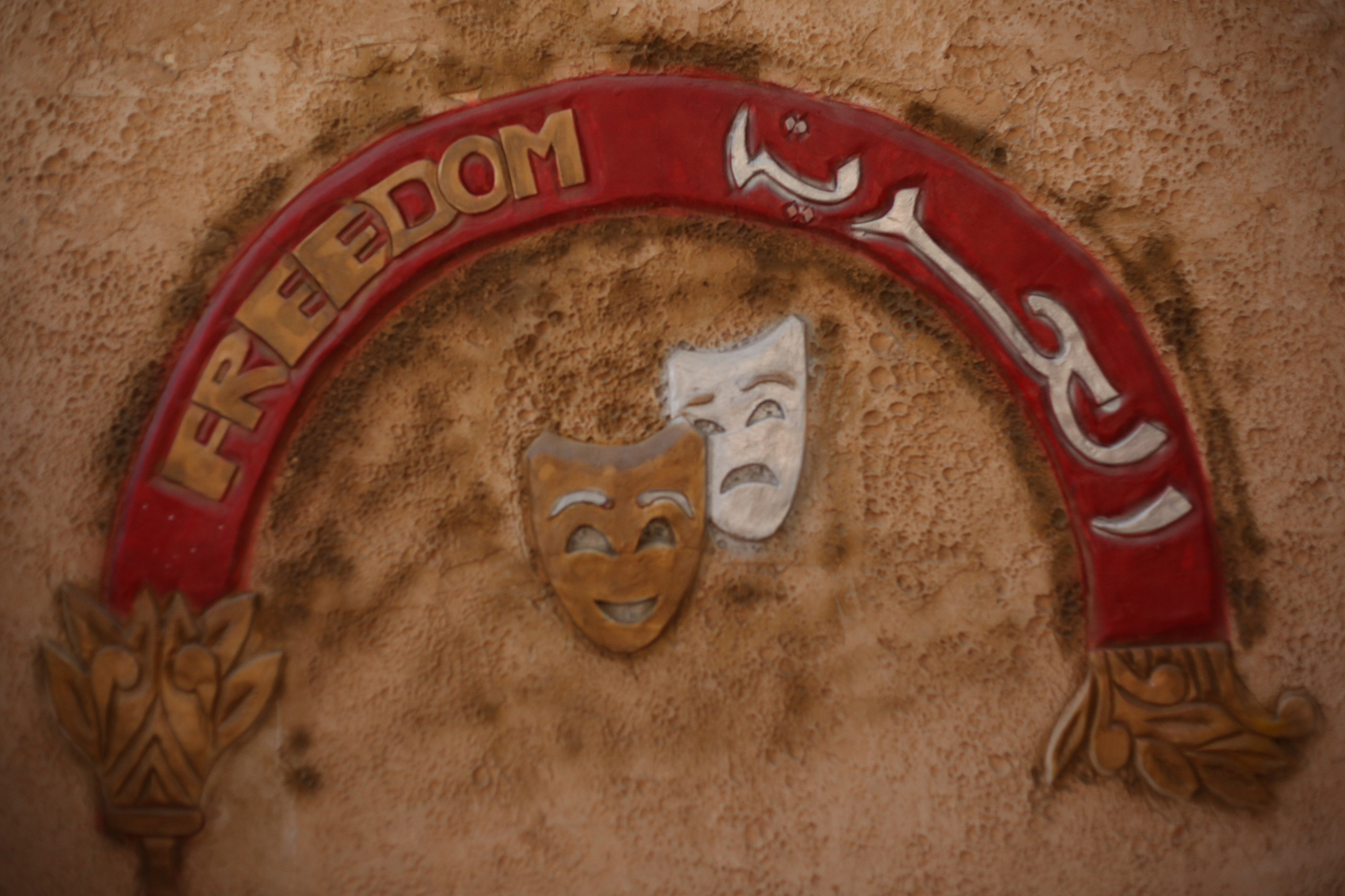
Freedom Theatre, Jenin Refugee Camp. Image by Non Violent Vigilante via Creative Commons
“I want to move people. I want them to wake up … It is their silence that allows things to continue.”
– Juliano Mer-Khamis
By Nikki Shaffeeullah
Artists in the West, and particularly in North America, do not often talk about the occupation of Palestine. For a community that by its very nature envisions itself as agents of discourse and change, the general silence from artists about Palestine is pervasive. This has to stop. Artists must talk about Palestine, and in the wake of Israel’s current deadly military assault on Gaza, artists must talk about Palestine now. We must do so because the occupation of Palestine is, among other things, an artistic issue.
The occupation of Palestine is an artistic issue because storytelling is an artistic craft. As artists we know that one story can be told an infinite number of ways. In storytelling, characters do not always have equal access to narrative platforms: this is particularly apparent in the story of Palestine. The dominant narratives told to the world about Palestine are instrumental in ensuring the occupation continues. Contemporary art-makers and audiences are versed in balancing many practices of artistic reception: the skilled playgoer, for example, can submit to Aristotelian catharsis at the moment of dramatic climax and still invoke Brecht to question the intentions of the artist and other possible perspectives not present on stage. It is vital that the world maintain such critical artistic reflexivity when told stories about Israel-Palestine, for as Joyce Dalsheim argues, “The literary nature of national narratives is extremely important” (156). As is the case in many settler-colonial societies, including Canada, the popular story told about the state of Israel relies on the erasure of Palestinian indigeneity. In the particular case of Israel: “a people without a land” needed a “land without a people,” and so in the story of Israel’s statehood, Palestinians become “an uncanny other, not fully recognized, not fully known, somehow magically imagined away, and for all these reasons that much more frightening” (167).
When they are not made invisible in the story of Israel’s creation, Palestinians are rendered hypervisible in narratives of violence that conceive of Palestine and Israel as somehow being equal players in an equal war, as opposed to a colonized people—refugees in their own land—resisting apartheid and siege from a military superpower. North Americans very often do not feel empowered to speak or think critically about Israel and Palestine because of the dominant narrative that conflates a 3500-year old religious history with a 66-year old colonial history — the story is thus, “too complicated to question” and those who dare tell another version of the story are bound to have their motives, integrity, and legitimacy questioned. The occupation of Palestine is an artistic issue because the prevailing story told about Israel-Palestine is an artful construction that serves to perpetuate the occupation, and it must be understood as such in order for critical analysis and action to take place.
The occupation of Palestine is an artistic issue for artists in the West when the colonial powers who maintain the occupation of Palestine exact influence so powerful and intimidating that it censors our art-making at home. In 2006, CanStage had planned to stage My Name Is Rachel Corrie, a play based on the true story of a young American activist who was killed by an Israel Defense Forces bulldozer while attempting to prevent it from destroying a Palestinian family’s home. However, the theatre pulled the show from its season after being dissuaded by “prominent benefactors” (Voss). New York Theatre Workshop pulled the show from their season the same year, saying they didn’t want to take “a stand in a political conflict” (Borger). When Teesri Duniya Theatre staged it the following year, it was met with charges of anti-Semitism from groups such as the Quebec-Israel Committee, who publicly derided the show—without having seen it (Arnold).
In 2009, Independent Jewish Voices Montreal (IJVM) organized a reading of Caryl Churchill’s Seven Jewish Children: A Play for Gaza, which Churchill wrote in response to Israel’s military assault on Gaza earlier that year. Again, the all-consuming taboo against talking about Palestine in the West surrounded the project: as IJVM’s Abby Lippman wrote in an alt.theatre Dispatch, “cries of outrage and accusations of anti-Semitism were swift, loud, and numerous.” Lippman stresses that “while heated discussion and legitimate criticism are both welcomed, the kinds of attacks made against Seven Jewish Children deflect attention from the very issues it raises for discussion.” Silencing work that speaks about Palestine is a normal, everyday affair: “Rather than engage with the substance of the play, these critics ignored IJVM’s invitations to come to see the play and discuss it with us and others—they merely sent letters of protest to the media.”
Also in 2009, the Koffler Centre for the Arts commissioned Toronto artist Reena Katz to curate each hand as they are called, an exhibit celebrating the artist’s Jewish roots and the Jewish history of Kensington Market. Despite the project itself having nothing to do with the occupation of Palestine, the Koffler Centre ended the exhibit and their association with Katz after learning about her history of Palestinian solidarity activism (Lu). The occupation of Palestine is an artistic issue because for artists like Reena Katz, artists who dare express solidarity with Palestine, their art, regardless of its content, becomes subject to political profiling. The silencing machine forces artists to choose between their artistic careers and legitimate critique of the state of Israel, even when the critique happens elsewhere. The occupation of Palestine is an artistic issue because supporters of the state of Israel try to force it to not be an artistic issue.
The occupation of Palestine is an artistic issue because artists do not create in isolation: we are part of a global community of artists, and our artist counterparts in Palestine call upon us to act in solidarity and observe a cultural boycott of Israel. In 2006, a network of Palestinian artists asked us international artists to join “in the boycott of Israeli film festivals, Israeli public venues, and Israeli institutions supported by the government, and to end all cooperation with these cultural and artistic institutions that to date have refused to take a stand against the Occupation, the root cause for this colonial conflict” (Palestinian Campaign). This year, again, Palestinian performing arts organizations and artists collectively called upon “fellow artists and cultural organizations to condemn the current aggressions against Gaza and the occupation of Palestine through petitions, protests and statements” and specifically to support “the Palestinian cultural and academic boycott of Israel” (Palestinian Performing). They are not calling for the boycott of a people or a nation, but of an oppressive state. As it was in South Africa, the boycott is a tool the international community can use to pressure Israel and Israel’s allies (including Canada) into ending Israeli apartheid.
The occupation of Palestine is an artistic issue because the way art lives in occupied Palestine is an exemplar of the urgency, the necessity, the power of art in the face of oppression. The way art lives in Palestine reminds us of its ability to exist and resist. The occupation of Palestine and subsequent border restrictions starve Palestinian artists of resources, but they find a way to create and innovate. Mohammed al-Hawarji, without access to paint, took to his canvas with curry and cumin; his work subsequently garnered international attention for its multisensory engagement of smell as well as sight. The occupation of Palestine and the Western media culture that supports it prevents Palestinians from speaking the political truths of their personal lives in the rare moments when they do have access to media.
Through art, however, their truth finds a way: activist Rafeef Ziadah’s poem We Teach Life, Sir responds to a moment when a journalist asked a loaded and leading “Don’t you think that everything would be resolved if you would just stop teaching so much hatred to your children?” Ziadah’s piece recalls the pressure in the moment to resist saying anything that could feed stereotypes of Palestinians (“not exotic, not terrorist”) and the journalist’s own prescribed rules (“Give us a human story. / Don’t mention that word ‘apartheid’ and ‘occupation’. / This is not political”). However, in the piece itself—her performance of it went viral online—she answers the question with unbridled honesty and artistry: “We Palestinians teach life after they have occupied the last sky. / We teach life after they have built their settlements and apartheid walls … No soundbite will fix this … We Palestinians wake up every morning to teach the rest of the world life, sir” (Ziadeh).
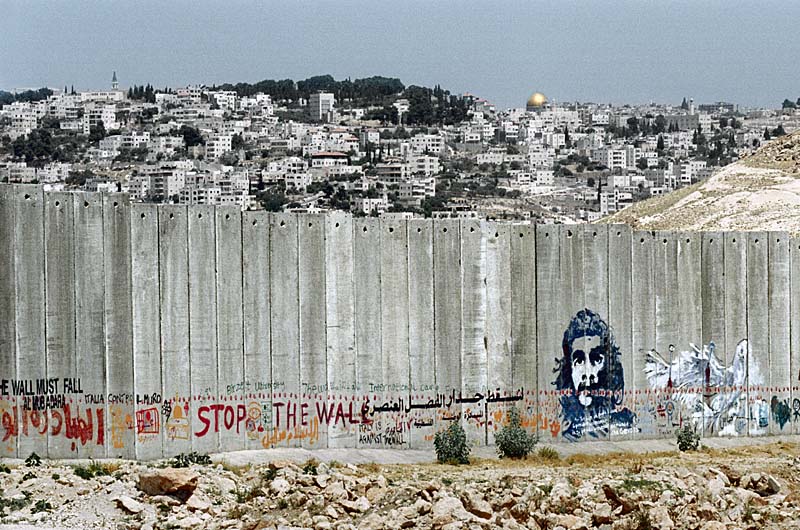
The occupation of Palestine is further an artistic issue because Palestinian artists cannot nurture and expand their practice through tour and exhibition, the way free artists do elsewhere. Indeed, since the creation of the state of Israel in 1948, imagined borders and eight-metre-high walls have prevented Palestinians from being able to travel through the land their ancestors called home for time immemorial. And yet, Palestine pushes back: The Palestine Festival of Literature gathers artists and puts them “on a bus that travels from one Palestinian city to another, breaking down a state-sponsored system of imposed isolation and ignorance” (Abulhawa). The occupation of Palestine is an artistic issue because the ways Palestinians make art in spite of and in response to their oppression is an incredible demonstration of how culture is a tool of resistance. The occupation of Palestine is an artistic issue because in Palestine, the spirit of survival lives in all dimensions of art: not only in the content of art but also in its forms, relationships, and ways of dissemination.
The occupation of Palestine is an artistic issue because artists have real power to destabilize the structures that oppress them. Israel’s current assault on Gaza was sparked by the kidnapping and shooting of three Israeli teenagers in the West Bank by Palestinians. Within a week, Israel had named suspects and ordered the demolition of their family homes. Three years earlier, Juliano Mer-Khamis—son of a Palestinian father and Jewish-Israeli mother and founder The Freedom Theatre in the West Bank’s Jenin Refugee Camp—was assassinated by a masked gunman just outside the theatre grounds. Mer-Khamis, too, was an Israeli citizen, but in less than two days Israeli authorizes abandoned the investigation of his death (Issacharoff and Harel). Israel was not interested in justice for Mer-Khamis because they knew his art challenged the state; they knew his art was powerful, popular, and already stimulating change. They saw that the occupation of Palestine is an artistic issue.
The occupation of Palestine is an artistic issue because imagination is a vital tool shared by artists and the oppressed. Our counterparts in Palestine remind us that “as artists, the most powerful weapon we have is our ability to play, dream and imagine.” The occupation of Palestine is an artistic issue because although generations of Palestinians continue to be born into the reality of occupation, and the cycles of siege repeat, “as long as we are able to imagine another kind of reality, we have the power to pursue it—a free and just Palestine” (Palestinian Performing).
Works Cited
Abulhawa, Susan. “Imagination has no substitute: Reflections on Palfest in Gaza.” The Electronic Intifada 7 June 2013. Web.
Arnold, Janice. “Corrie play not helpful to dialogue.” All About Jewish Theatre. Web.
Borger, Julian. “Rickman slams censorship on play about US Gaza activist.” The Guardian 28 February 2006.
Dalsheim, Joyce. “Settler Nationalism, Collective Memories of Violence and the ‘Uncanny Other.'” Social Identities 2 (2004): 151.
Issacharoff, Avi, and Amos Harel. “Israel leaving investigation of Mer-Khamis murder to PA.” Haaretz 6 April 2011.
Lippman, Abby. “What Should We Tell Them”? alt.theatre: cultural diversity and the stage 6.4 (2009): 35.
Making art in the Gaza Strip: Mohammed al-Hawajri. BBC.4 April 2014. Video.
“Palestinian Filmmakers, Artists and Cultural Workers Call for a Cultural Boycott of Israel.” Palestinian Campaign for the Academic & Cultural Boycott of Israel. www.pacbi.org. 4 August 2006. Web.
Palestinian Performing Art Programme. “Statement by Palestinian performing arts organizations.” Thefreedomtheatre.org. 17 July 2014. Web.
Ross, Val. “CanStage loses interest in controversial Corrie play.” The Globe and Mail 28 December 2006.
Katie Housley Winner of the 2014 Toronto Fringe 24-Hour Playwriting Competition
WINNER OF THE 24 HOUR PLAYWRITING CONTEST, PRESENTED BY THE PLAYWRIGHTS GUILD OF CANADA:
Midnight on a Monday by Katie Housley
After an emotional day at work, an aspiring sitcom writer finds an unlikely ally in a subway station kiosk owner.
The play show will receive a staged reading to be directed by Praxis Theatre Artistic Director Michael Wheeler, performed by Kat Letwin and Susan Q Wilson.
Location: Tarragon Theatre Solo Room
Date: Sunday July 13th
Time: 9:30pm.
Katie is a recent graduate of the University College Drama Program at the University of Toronto. She was a member of the Paprika Festival’s New Writers Series this past Spring under the mentorship of Convergence Theatre’s Julie Tepperman. Selected acting credits include Teatron Theatre’s Seven Days, Toronto Fringe Festival’s Genesis and Other Stories by Rosamund Small, and Docket Theatre’s Performing Occupy Toronto. She has studied improvisation with the Second City Training Centre and classical acting with the American Conservatory Theater. Katie will be attending the Stella Adler Acting Conservatory in New York this coming Fall. Upcoming: She Kills Monsters at the Red Sandcastle Theatre.
2014 Jury:
Denise Norman, Graham Isador, Donna-Michelle St. Bernard, Barbara Fingerote, Renna Reddie, Jon Michaelson, Indrit Kasapi, Laura Anne Harris, Maya Rabinovitch, Merle Garbe.
Cast:
Kat Letwin
Favourite stage roles include Acaste in The Misanthrope (Mirvish/the red light district), Mrs. Griggs in Sockdolager (The Templeton Philharmonic), Noaman in A Funeral For Clowns (Toronto Fringe 2012 Patron’s Pick), Princess/Michelle in Scheherazade (Next Stage Festival 2014), and Evelyn Marlow in Dark Matter (Circlesnake Productions). Kat has been featured on MTV’s Losing It, currently voices Dr. Ashfaq (Tall, Dark & Handsy) and Waggles Billingsworth (Money Dog) for Bite TV, and just finished her run of Rulers of the Universe: A Love Story at this year’s Toronto Fringe. She can be seen every month at Comedy Bar as co-host of Solo Combo, an experimental variety show for sketch comedians and improvisers.
Susan Q Wilson
Since returning to acting in January 2010, Susan has demonstrated her versatility on stage and on camera. Selected theatre: Helen, Radical (Toronto Fringe 2014), Dahlia Day, I’m Still Here! (New Ideas Festival), Dowager Countess, Uptown Abbey (Mysteriously Yours), First Witch, Macbeth (Hart House Theatre), Jean Rhys, After Mrs. Rochester (Alumnae Theatre). Selected film/web: Esther, Senior Drivers (Dir: Gary Hayes), Maddy Miller, Out With Dad (Dir: Jason Leaver). Website
Rosamund Small, writer of Vitals, Winner Outstanding New Play & Outstanding Production
OUTSTANDING PRODUCTION All Our Happy Days Are Stupid Suburban Beast Birth of Frankenstein Litmus Theatre Ralph + Lina Ahuri Theatre with the support of Why Not Theatre and Theatre Smith Gilmour TRUDEAU AND THE FLQ Presented by VideoCabaret in association with Soulpepper Theatre Co. Vitals An Outside the March Production sponsored by Theatre Passe Muraille
OUTSTANDING NEW PLAY
Alanna Mitchell Sea Sick The Theatre Centre
Christina Serra, Michele Smith and Dan Watson Ralph + Lina Ahuri Theatre with the support of Why Not Theatre and Theatre Smith Gilmour
Litmus Theatre Collective Birth of Frankenstein Litmus Theatre Rosamund Small Vitals An Outside the March Production sponsored by Theatre Passe Muraille
Sheila Heti All Our Happy Days Are Stupid Suburban Beast
OUTSTANDING DIRECTION
Chris Hanratty The Tin Drum: an original adaptation of the novel by Günter Grass UnSpun Theatre
David Ferry After Miss Julie The Red One Theatre Collective Matthew Thomas Walker Birth of Frankenstein Litmus Theatre
Michael Hollingsworth TRUDEAU AND THE FLQ Presented by VideoCabaret in association with Soulpepper Theatre Co.
Mitchell Cushman Vitals An Outside the March Production sponsored by Theatre Passe Muraille
OUTSTANDING PERFORMANCE – MALE
Alex McCooeye Richard III Shakespeare in the Ruff
Craig Pike A NUMBER CART/HORSE THEATRE
Jakob Ehman Donors safeword Mac Fyfe TRUDEAU AND THE FLQ Presented by VideoCabaret in association with Soulpepper Theatre Co.
Ron Pederson Pith! By Stewart Lemoine The Theatre Department
OUTSTANDING PERFORMANCE – FEMALE
Christina Serra Ralph + Lina Ahuri Theatre with the support of Why Not Theatre and Theatre Smith Gilmour Claire Armstrong After Miss Julie The Red One Theatre Collective
Kate Hennig Rifles Praxis Theatre (presented by Next Stage)
Katherine Cullen Vitals An Outside the March Production sponsored by Theatre Passe Muraille
Naomi Wright A Room of One’s Own The Bloomsbury Collective
OUTSTANDING PERFORMANCE – ENSEMBLE
The Ensemble of All Our Happy Days Are Stupid Suburban Beast The Ensemble of Passion Play by Sarah Ruhl Outside the March, Convergence Theatre, Sheep No Wool
The Ensemble of Ralph + Lina Ahuri Theatre with the support of Why Not Theatre and Theatre Smith Gilmour
The Ensemble of The Tin Drum: an original adaptation of the novel by Günter Grass UnSpun Theatre
The Ensemble of TRUDEAU AND THE FLQ Presented by VideoCabaret in association with Soulpepper Theatre Co.
OUTSTANDING SCENIC DESIGN
Anahita Dehbonehie Vitals An Outside the March Production sponsored by Theatre Passe Muraille Camellia Koo The Wanderers Cahoots Theatre Company
Michael Spence The Sacrifice Zone Theatre Gargantua in association with The Uncertainty Principle
Rae Powell All Our Happy Days Are Stupid Suburban Beast
Sherri Hay YouTopia Vertical City Performance
OUTSTANDING COSTUME DESIGN
Anna Treusch The Tin Drum: an original adaptation of the novel by Günter Grass UnSpun Theatre Astrid Janson TRUDEAU AND THE FLQ Presented by VideoCabaret in association with Soulpepper Theatre Co.
Catherine Hahn WEATHER THE WEATHER or how we make it home together Theatre Columbus
Michelle Bailey Passion Play by Sarah Ruhl Outside the March, Convergence Theatre, Sheep No Wool
R.Kelly Clipperton Dinner at Seven-Thirty Theatre Rusticle
OUTSTANDING LIGHTING DESIGN
Dave DeGrow The Tin Drum: an original adaptation of the novel by Günter Grass UnSpun Theatre
Laird Macdonald The Sacrifice Zone Theatre Gargantua in association with The Uncertainty Principle Michelle Ramsay Sister Mary’s a Dyke?! Cahoots Theatre Company
Michelle Ramsay The Wanderers Cahoots Theatre Company
Patrick Lavender Birth of Frankenstein Litmus Theatre
OUTSTANDING SOUND DESIGN/COMPOSITION
Beau Dixon Rifles Praxis Theatre (presented by Next Stage)
Christopher Stanton The Tin Drum: an original adaptation of the novel by Günter Grass UnSpun Theatre
John Millard WEATHER THE WEATHER or how we make it home together Theatre Columbus Sound Design and Live Foley: John Gzowski/ Original Vocal Composition: Jacquie PA Thomas and the Ensemble The Sacrifice Zone Theatre Gargantua in association with The Uncertainty Principle
Thomas Ryder Payne Nightmare Dream IFT Theatre, Newface Entertainment
I sat in the same bar for 7 years, from 5 a.m.
(the day bartender let me in 2 hours early)
to 2 a.m.
sometimes I didn’t even remember going back
to my room
it were as if I were sitting on the barstool
forever
I had no money but the drinks kept
arriving
to them I wasn’t the bar clown
but the bar fool
but at times a fool will find a greater
fool to
admire him,
and,
it was a crowded
place
actually, I had a viewpoint: I was waiting for
something extraordinary to
happen
but as the years wasted on
nothing ever did unless I
caused it:
broken bar mirrors, a fight with a 7 foot
giant, a dalliance with a lesbian, many things
like the ability to call a spade a spade and to
settle arguments that I did not
begin and etc. and etc. and etc.
one day I just upped and left the
place
like that
and I began to drink alone and I found the company
quite all right
then, as if the gods were bored with my peace at
heart, knocks began upon my door: ladies
the gods had sent the ladies to the
fool
and the ladies arrived one at a time and when it ended with
one
the gods immediately–without allowing me any respite–sent
another
and each began as a flash of miracle–even the bed–and the
good ended up
bad
my fault, of course, yes, that’s what they told
me
but I remembered the 7 years in the bar, I hardly ever bedded
down with anybody
the gods just won’t let a man drink alone, they are jealous of
his simple strength and salvation, they will send the lady
knocking upon that door
I remember all those cheap hotels, it were as if the women
were one: the delicate little rap on the wood and then:
“oh, I heard you playing that music on your radio…we’re
neighbors, I’m down at 603 but I’ve never even seen you in
the hall…”
“come on in…”
and there go your balls and your sanctity, Men’s Liberation,
they say, is not needed
and then you remember the bar
when you walked up behind the 7 foot giant and knocked his
cowboy hat off his head, yelling:
“I’ll bet you sucked your mother’s nipples until you were
12 years old!”
somebody in the bar saying: “hey, sir, forget it, he’s a mental
case, he’s an asshole, he doesn’t know what he is
saying!”
“I know EXACTLY what I am saying and I’ll say it again:
I’ll bet you sucked…”
he won but you didn’t die, not at all the way you died when the
gods arranged to get all those ladies knocking and you went for
the first flash of miracle
the other fight was more fair: he was slow, stupid and even a
little bit frightened and it went well for quite a good while,
just like with the ladies those gods
sent
the difference being, I thought I had a chance with the
ladies
created and performed by Deanna Fleysher
FRI, May 30 @ 8PM
SAT, May 31 @ 6PM
SUN, June 1 @ 4:30PM
at the Pia Bouman School, 6 Noble Street
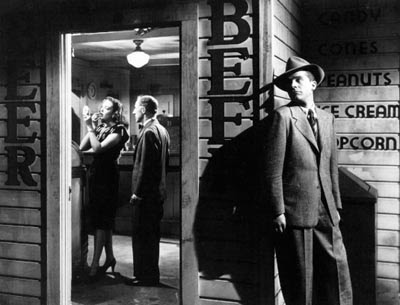
Tickets hereThe director of international hit Red Bastard comes back swinging with BUTT KAPINSKI. Think it’s a solo show? Think again. Private eye Butt Kapinski invites you to co-star in a film noir fantasy. This funny, filthy, fully-interactive ride is riddled with sex, sin, shadows and subterfuge. Let’s kick reality to the curb and play in a world of dark dreams and bad similes.Winner: Most Orgasmic Production and Best of Fest (Hollywood Fringe 2013), Volunteers Choice Award and Cultch Award (Vancouver Fringe 2013), Official Selection: Dallas Solo Fest 2014, UNO Festival 2013 and Out Of Bounds Festival 2012. ADULTS ONLY!
Check out the trailer here.
For more information visit the show’s website here.
“Super funny and astonishingly inventive. Like watching a trapeze artist soar without a net…”
~ Artsbeat LA
“After the years and years of weaker and waterier imitations, we now find ourselves rejecting the very notion of a holy stage. It is not the fault of the holy that it has become a middle-class weapon to keep the children good.”








Recent Comments