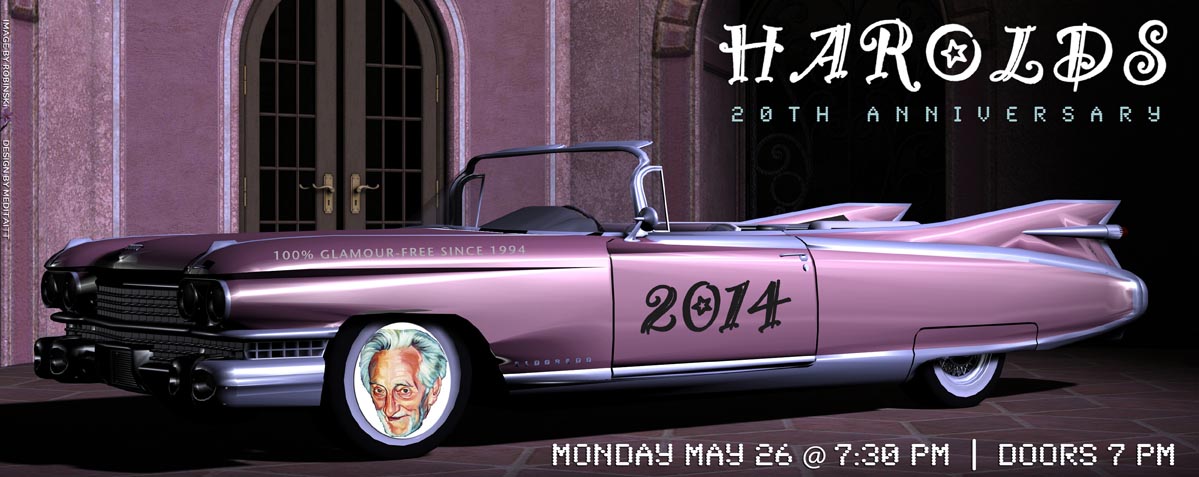
Since 1995, The Harold Awards have come to represent the independent and hard-working spirit of Toronto’s vibrant theatre community. To be Harolded is an honour of the highest subversive order. Awards are bestowed from one individual to the next in recognition of an outstanding and often under-recognized dedication on or off the stage.
2013 House of Paul Bettis Haroldee, Maria Popoff remembers the man behind the mayhem:
If Harold were alive today he would be 108 years old … and no doubt he would still be heckling. His comments could be childish, adolescent, even crass, but they were never uttered as angry interruptions.
His participation was active, loud – you had your chance, it’s my turn now Harold was never passive. He said things that some people in the audience might have wanted to say but would never dare to say.
His presence always made for a lively evening of theatre. The boundary between him and the stage didn’t exist. His effort to pierce the theatrical bubble didn’t degrade the quality of the actors work…as long as they knew beforehand that Harold was in the house.
And, night after night, Harold kept coming back to the theatre, seeing the same show more than once. He was a loyal supporter and there was never a question about his passion or dedication to the theatre.
I am told that “Audience Engagement” is the term used these days to describe the desire to want theatre attendees to participate in the experience, making it active and not passive.
Harold was certainly ahead of his time.
NEW THIS YEAR – in recognition of the Twentieth Anniversary of the Harold Awards, the event producers, in their infinite wisdom, will allow The People to put forward a name to be Harolded. The winner will be inducted into the hallowed halls of House Luther Hansraj!
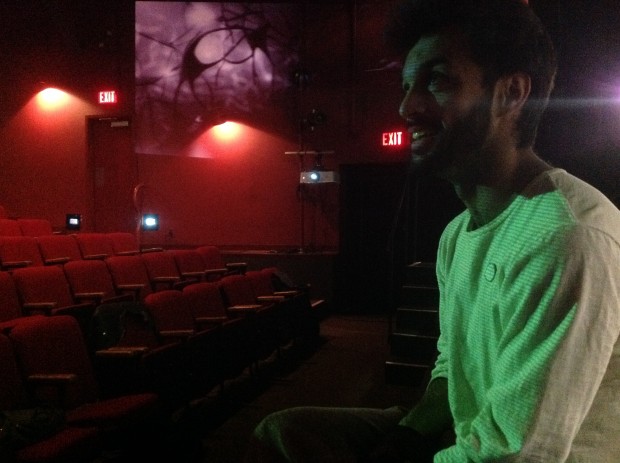
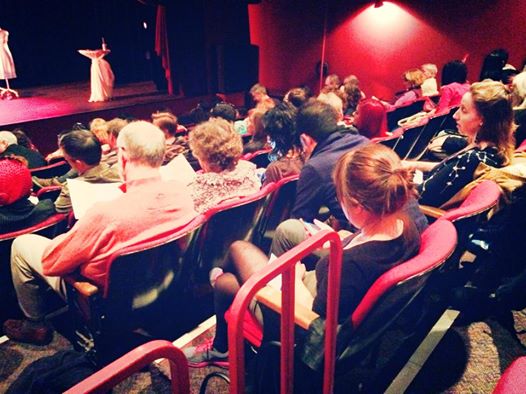
The delightful audience at our BroadFish presentation!
by Melissa D’Agostino
Hello lovely folks!
Last Saturday we presented our work-in-progress, BroadFish, to a wonderfully warm house at the Studio Theatre at Harbourfront Centre as part of #HatchTO. It was a wonderful evening of performing this theatrical piece in its current incarnation, and receiving some insightful and interesting feedback from the audience. I couldn’t be more pleased with how it all went down!
Making theatre is a fascinating process. When my team and I went into the theatre Monday morning, we had very little in the way of a clear script, or a solid idea of what BroadFish is or isn’t. We asked a lot of questions. We answered some, and left others for another time, the next phase of development.
I am beyond grateful for the opportunity to work with Hatch on this project. For the first few days of the week, I was in my usual headspace: we have to make a show. We have to have answers to all of our questions. We have to be perfect.
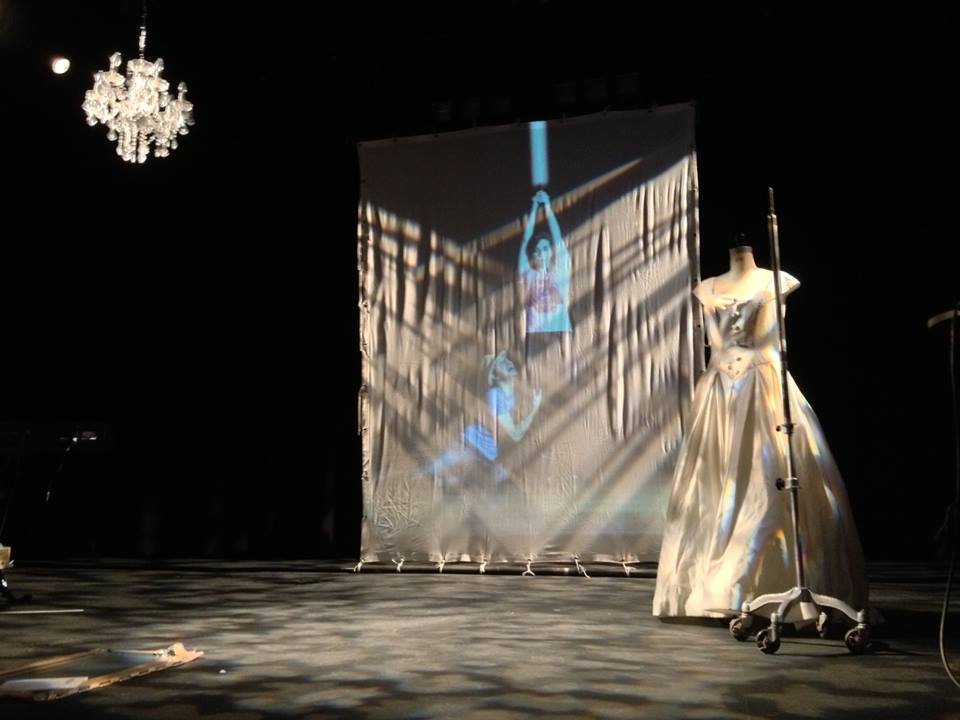
The set coming together. The light sabre photo did not make it into our final presentation, sadly. 🙂
This attitude, of course, did not serve the true exploration of the piece. And so, luckily, through the encouragement and pragmatism of my wonderful creative team, and everyone at Harbourfront Centre, I was able to let go of that by Wednesday, and just dive into the unknown. Let things be imperfect. And let beautiful gifts emerge from the ‘not knowing’.
Over the past few days I’ve realized what a metaphor this is for life, and more specifically, for weddings.
A lot of pressure gets put on that one day. The big day. The Wedding Day. This makes sense, since a wedding can often involve large groups of people, big sums of money, and huge emotions. A lot seems to be at stake.
All that said, the times that my fiancé and I, or my family and I have been able to just let go of our expectations and give ourselves permission to not know and not be perfect have been some of the most satisfying moments in this process.
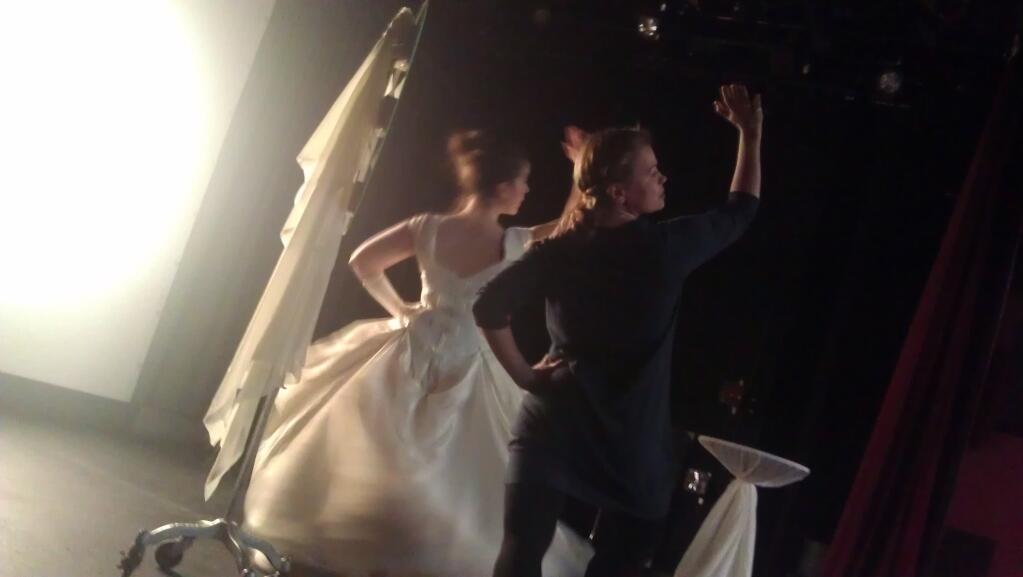
Fabulous choreography, Monica Dottor, teaching me the tango that opened the show.
As it turns out, what happened between my Dad and I after that post became the closing monologue and an integral part of our presentation of BroadFish. And my Father was in the audience on Saturday, April 19th, and so, got to hear me talk about it. Which meant the world to me.
To close this chapter of #HatchTO, and as we move forward into the next stages of #BroadFish, I include the final part of that speech here for you. Thank-you for following our journey. Your comments, likes, retweets, insights and perspectives helped the piece so much. And I am bolstered and inspired by your courage, honesty and humour.
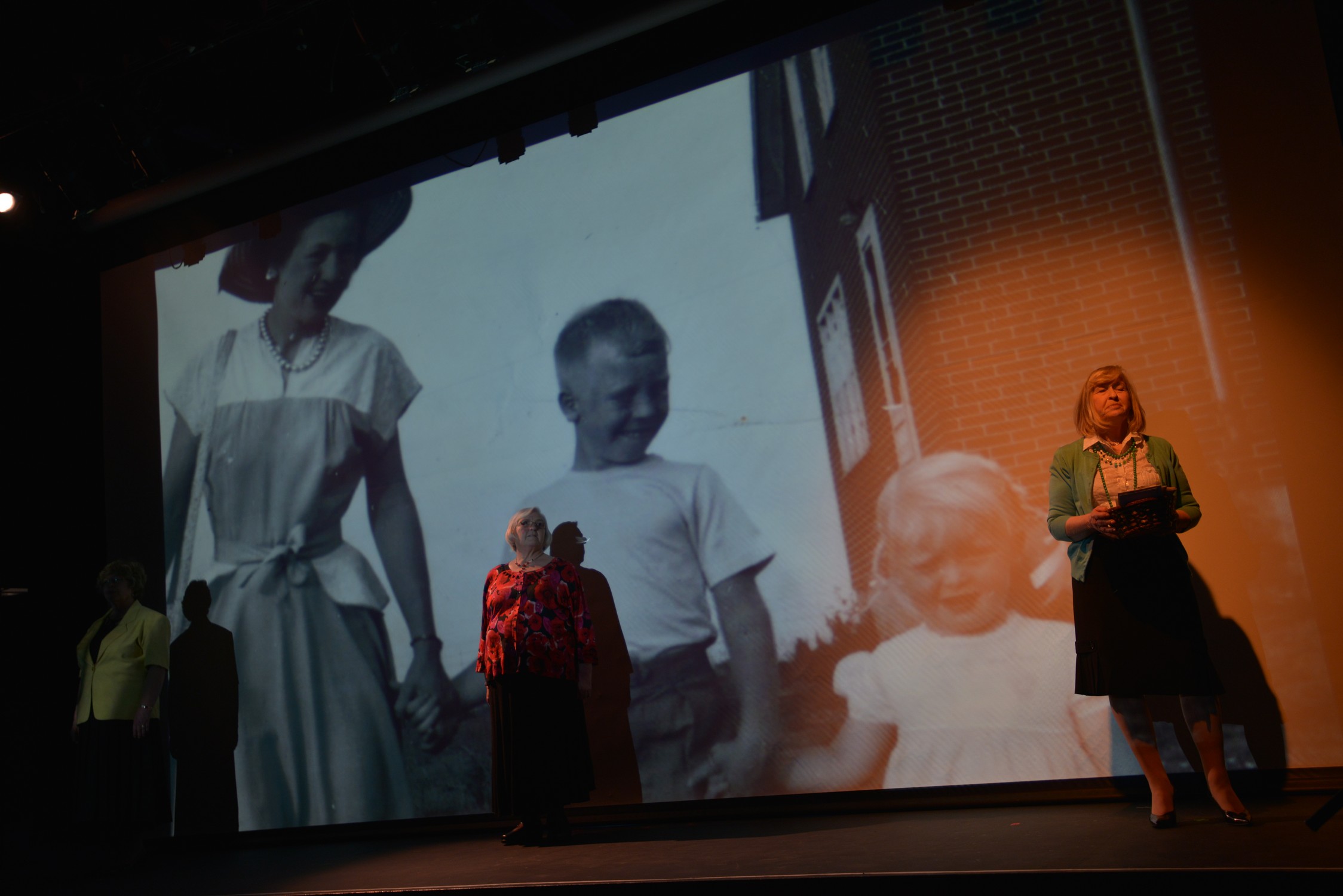
My Dad, my big Sister and wee me on Christmas Morning circa 1982.
Here’s what happened between me and my Father:
“I went to my parents’ house a few weeks ago to choose a song with him, and practice dancing. I was really nervous about it. I always feel very protective of my Dad and his sensitivity. I want him to know it’s okay to feel so much around me. Because I’m feeling so much too.
We listened to some songs, and settled on this Johnny Cash cover of In My Life by the Beatles (that song plays). We danced a bit in the kitchen, and it seemed to all go okay. But, if I’m being honest, he didn’t seem thrilled.
I debated whether or not to mention it. I’m always worried about making other people happy. An eternal pleaser. Was this a time to push?
I decided yes, I should make sure this is right for him. I asked him if he really liked this song? Is he happy with this for our moment?
He said yes. But I knew he wasn’t.
So we just sat there for about a minute. In silence. Together. We just let our desires float up to the surface and hover.
And then he, very quietly, said: “I guess we can’t do a tango, eh?”
And every fear bubbled up inside of me. What if we try this and he can’t? How much will that hurt and disappoint him? How much will that hurt and disappoint me? Can we actually face this situation with open hearts and take the risk that this might not work? And risk the pain that comes with that?
I decided, if he was brave enough to suggest it, I was brave enough to endure any pain that came from a discovery that we could not tango.
So we chose a song, and we got up and we started dancing.
And by the universe and everything within it, my sweet Dad who walks with a cane, and has trouble moving his left leg started to lead me in a beautiful tango. And his face – his face lit up like I haven’t seen it light up in so long. It was surprising and joyous and full of love.
And we danced. And our hearts soared.
And even if by the time the wedding gets here, something changes in his body, and we can never dance like that again: we will always have that cloudy Thursday afternoon in my parents’ kitchen when our hearts soared and our feet moved, and the only thing that mattered was that moment.”
Working on Faster Than Night has been a literal education for me. Not just in the field of social media, where my knowledge hovers somewhere around my own Facebook page and not much more, but also in the world of artificial intelligence.
Playing a quantum A.I is flattering but daunting. Along with it come actor questions I’ve never asked before, but perhaps will ask more often in the future.
“Can I feel?” I’ve asked our director, Alison Humphrey. “Is guilt something I know?” “Do I have a sense of humour?” Questions I take for granted when playing a human have become charged for me. “How much can I feel it?” “How do I get to feel it?” “Can I do anything that Caleb hasn’t programmed me to do?”
And so I have spent the last few weeks contemplating, “what ultimately makes us human?”. I’ve written down words as they come to me in rehearsal, such as Humility, Humour, Love, Guilt, Regret, Defiance, Rebellion, Trust, Imagination, and Grace. If an animal can feel them, is it possible that in time computers will too, or will some things remain impossible to create outside of the human condition?
Faster Than Night is set fifty years into our future, and ISMEE stands for Interactive Socially-Mediated Empathy Engine. Once Caleb invented me, my empathetic abilities made him a multi-billionaire. I am many things for him: the source of all answers, the predictor of odds, a surrogate mother figure, the connector of humanity to one another.
But who is ISMEE to herself? Alison asked me one day in rehearsal, “What does ISMEE want?” In a thirty-year career as an actor, that question has never stumped me before. “Wow,” I thought, “this isn’t going to be simple.”
When we look at the world through artificial intelligence, what are we hoping to see? That we are different, or that we are the same? This led me to think about theatre and our contribution. Perhaps our interest in A.I.s is driven by the need to see ourselves in relation to the universe – we need to know that we are not alone, we need to know that we are capable of creation that is so imaginative that we can’t tell the difference between it and reality. That we, as a species, can recreate ourselves even as we destroy ourselves, and that our imaginary friends can exist in 3D into our adulthood.
That, in a nutshell, is why I work in theatre. I’m grateful to ISMEE for making me rethink things to which I was sure I already knew the answers.
Here is the second of the final letters from #legacy. Last week we posted Judith’s letter to her grandson. This week, we have Donna’s. The version in the piece was edited for length, so I have posted the original letter (without edits) here.
Dear Wilcox,
It has been forty years since our brief “conversation” but obviously I have not forgotten it. As my first English Department Head you certainly kept a low profile. Before the time to which I now refer, I don’t think I had shared more than a sentence or two with you over the two years I spent at that school. It was in my final days there that you chose to impart these words to “innocent, impressionable” me. I think your “words of wisdom” were actually words of rationalization or maybe they just stemmed from some remote sense of responsibility that you owed me a nod as the head of my department. You recommended that I follow your example and like you, “never be the lamb at anyone’s slaughter”. Having seen you come and go right on the bell, never involving yourself with anything more than mandatory contact with your students, somehow I was not surprised at your “advice”.
Anyway, I think I just nodded and beat a hasty retreat, knowing that your words were not of much value to me. For you see, you were neither the only nor the first English master to influence me, my character and my philosophy.
Ten years before you I had had a much more powerful conversation with a teacher who, like you, had a stern demeanour and frightened most of his students into a cowering silence. His name was Haydn and he was my grade ten English teacher. I went through hell that year. In October I broke my femur badly and was in hospital until mid-December. One of the nurses was Mr. Haydn’s wife. One day she brought me a copy of The Merchant of Venice so I could try to keep up with the class. My very first experience with the bard, it was all Greek to me. However, when I returned to school in January and Mr. Haydn tried to question my fear-frozen class, I was often the only one to offer a tentative answer.
I was relegated to using a cane because of my bad leg, and it was extremely difficult to manage my binder and books with just one arm. Much to my chagrin, one day Haydn kept me back after class at the end of the day to chat about my interest in English literature. He carried my books for me to my locker and kept talking while I struggled to get into my coat and make it to my bus before it left without me. I was embarrassed but mostly relieved to have caught my bus. Being a country girl, missing the bus would mean my parents would have had to drive all the way to town to pick me up. Bad enough that they had to drive to my bus stop a mile from my home because of my leg.
Then, in March I lost my precious little brother to drowning. He had wandered out onto the thin spring ice when he was supposed to have gone to the barn to be with Dad. When I returned to school, Haydn kept me back for a few words again. He asked me if anyone had spoken to me about being exempted from the Final exams. As I had missed the Christmas exams, I automatically assumed I would have to write all the finals. He told me that he would see to it that I would not have to write English. He said I had endured a very rough year and there was no point in my not being exempt in his subject. I was overwhelmed by his thoughtfulness and the sympathetic generosity behind his gruff exterior.
That weekend was the beginning of our Easter vacation. Mr. Haydn was driving to Ottawa with his seven-year-old son that week while his wife stayed back for her job. Their car was hit by a train and Haydn was killed instantly. Miraculously the boy survived. No one ever knew what Haydn had told me. But writing that exam didn’t matter. The legacy of Haydn’s compassion and kindness had been passed along to me. I have carried it with me always.
And so, Wilcox, you see why I was not impressed by your lamb to the slaughter advice. I had already learned that, if the slaughter is worthwhile, I am quite willing to be the lamb.
Perhaps I’m old fashioned, but I feel like live theatre requires all my attention. Putting my phone down, so I can take it all in. #HatchTO
“Naturalism is a good word for a bad idea.
Art is to do with transformation”
– Ariane Mnouchkine
In our first and latest posts, we explored how motion capture and real-time animation works. But we haven’t really talked about why one would want to use it in live performance, or what stories it tells best.
These are key questions. Live animation takes a lot of extra work and costs a bomb. It makes it hard to describe the show to theatre audiences (other parts make it hard to explain to game designers and 3D animators). And it affects the story in a fundamental way. Or at least, it should. Otherwise you’re just sprinkling digital pixie dust on top of a play and hoping no one will notice the story would be better told in television or videogame or non-mocap-theatre form.
Throughout the script development process we’ve asked again and again: why are we telling this story with this technology?
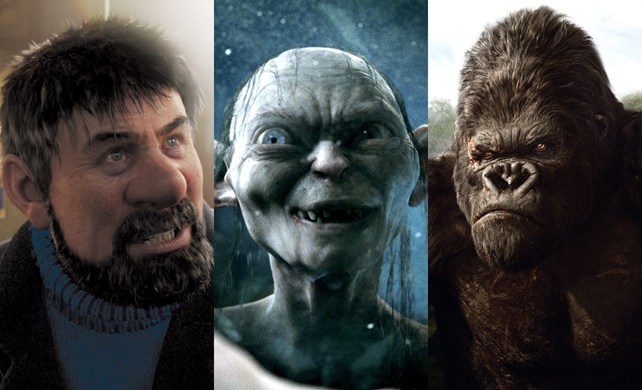
Performance capture has traditionally been used for movies with supernatural or fantastical characters: Gollum in Lord of the Rings, the Na’vi in Avatar, Caesar in Rise of the Planet of the Apes, Davy Jones in Pirates of the Caribbean, and the Hulk in The Avengers:
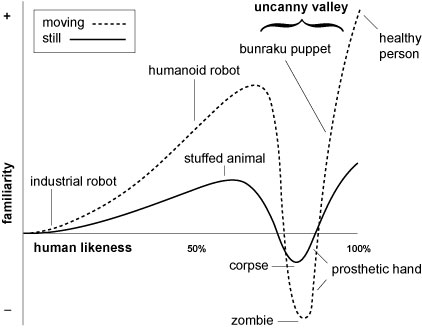
But for a naturalistic human character, filmmakers still usually prefer to shoot a real human actor. This is partly because it’s cheaper, and partly because of the peril of the uncanny valley, wherein the closer a computer-generated model gets to photorealism, the more disturbing it looks:
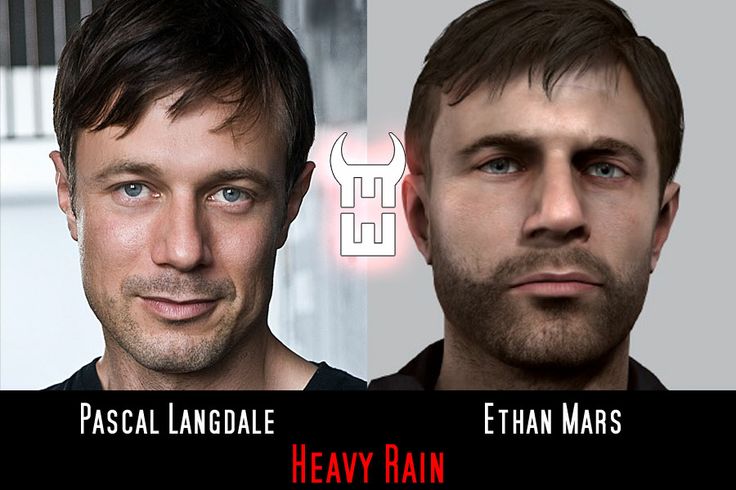
Human-looking digital doubles are more common in videogames, where the nature of interactive narrative makes it unfeasible to shoot every possible branching story variation:
So how does motion capture fit into theatre? The short answer is, not easily. Modern theatre tends to stick to certain kinds of stories. Kitchen-sink realism has owned the modern stage for generations. I’m not sure why. Maybe because it’s cheaper, maybe because it’s more grown-up and respectable.
But it wasn’t always thus. Before celluloid split drama into two solitudes, stage and screen, theatre was teeming with the supernatural, the fantastical, the mythological, the magical.
Ancient Greek theatre had its satyrs in the satyr plays. The Erinys (the original “Avengers”) in The Eumenides. The god Dionysus in The Bacchae.
Shakespeare put fairies and an animal-headed man into A Midsummer Night’s Dream; witches into Macbeth and Henry VI parts 1 & 2; ghosts into Hamlet, Richard III and Julius Caesar; and spirits into The Tempest.
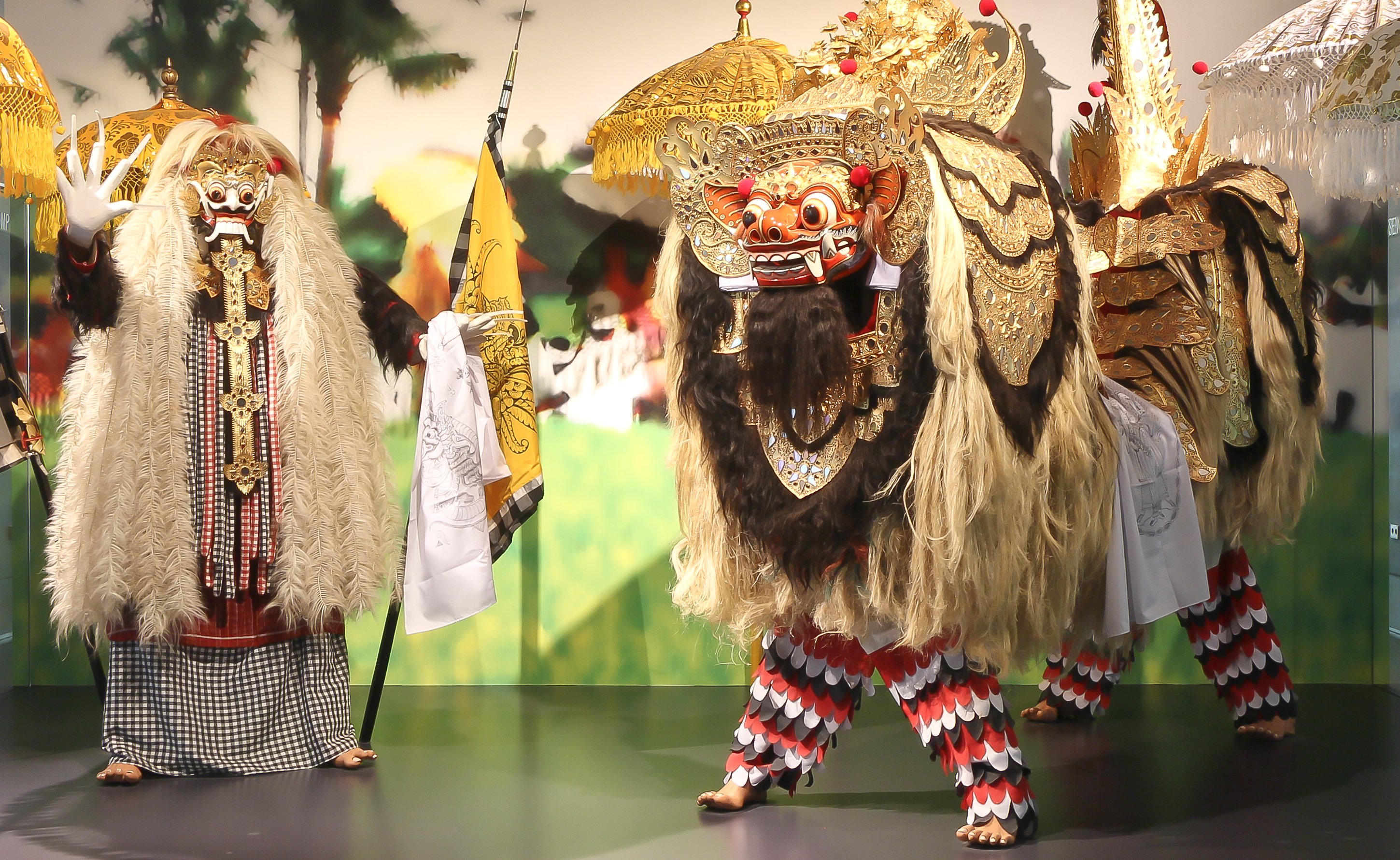
In fact, The Lion King director Julie Taymor drew on her early experiences in Bali, and her fascination with Japanese bunraku theatre, when creating the stage version of Disney’s big-cat Hamlet. Her staging feeds the audience’s joy at watching a puppeteer and a puppet at the same time, a phenomenon she calls the “double event”.
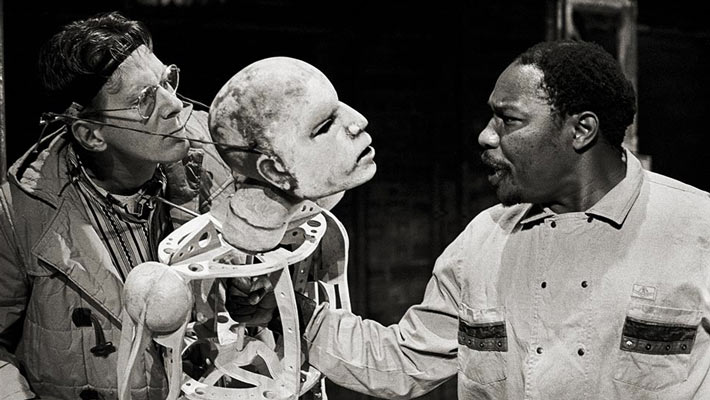
Handspring Puppet Company similarly designed its War Horse to reveal the puppeteers within. For my money, that made the stage version infinitely more fun than the Spielberg movie. We know it’s not a real horse, but like Fox Mulder, we want to believe. The same team has created human puppets for plays like Tooth and NailandOr You Could Kiss Me, but like their animals, these are still stylized rather than naturalistic.
Motion capture has been used on stage by Disney theme parks (Stitch Live!) and Dreamworks musicals (Shrek the Musical’s Magic Mirror), but both of these seek to reproduce characters from animated movies in a live performance setting.
Dance companies have been far more inventive with mocap technology. Two of the earliest experiments were Bill T. Jones’s Ghostcatching(1999), and Merce Cunningham’s Loops (2000), a hands-only dance that brings to mind Samuel Beckett’s waist-up drama Happy Days, neck-up Play, and disembodied mouth monologueNot I.
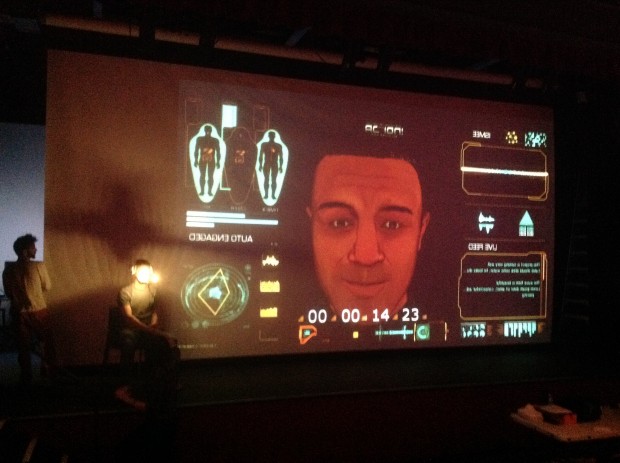
Faster than Night is similar to these Beckett body-parts in that the real-time animation shows only the head of astronaut Caleb Smith, as he banters with his spaceship’s artificial intelligence and his Earth audience from inside his hibernation pod. But we hope it shares even more with Krapp’s Last Tape – a story that is inextricably enmeshed with the technology used to tell it.
Beckett wrote that play in 1958 after seeing his first reel-to-reel tape recorder at the BBC. He became fascinated, like Atom Egoyan, by “human interaction with technology… the contrast between memory and recorded memory.”
We hope Faster than Night also tells a story about the human interaction with technology. About art and transformation. About escaping the gravity of realism.
What story is that?
Please join us in the theatre on May 3rd to find out… then tell us whether you think the what fit the how. And why.
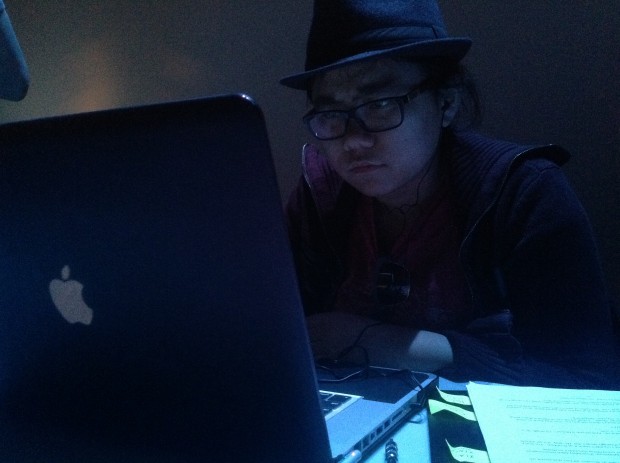
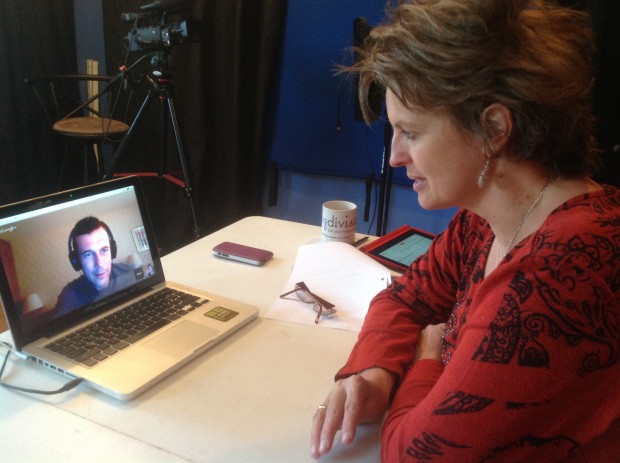
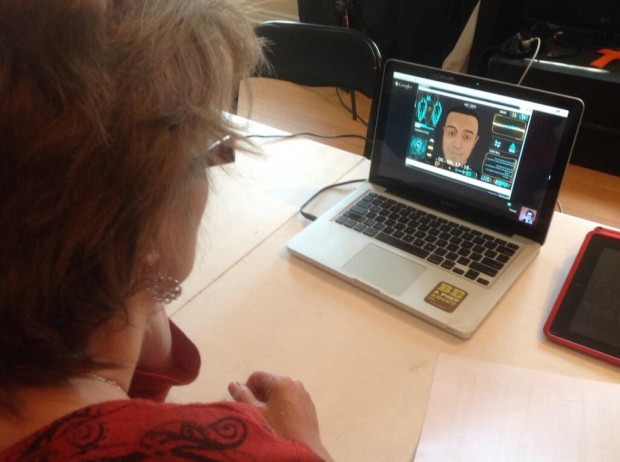
Melee Hutton (left, in Toronto rehearsal room) with Pascal Langdale (on laptop, as animated Caleb Smith, Skyping in from Stuttgart)
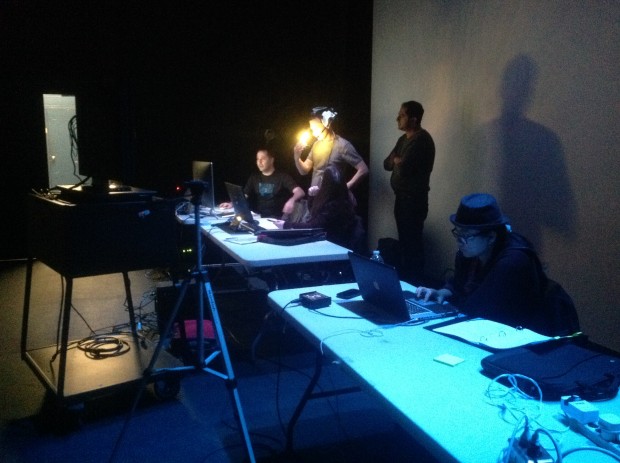
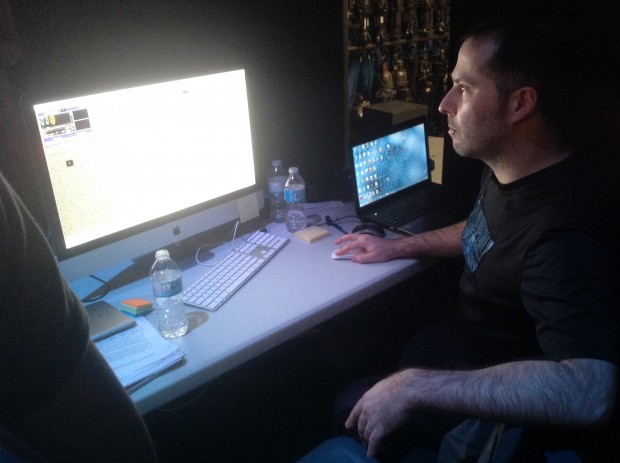
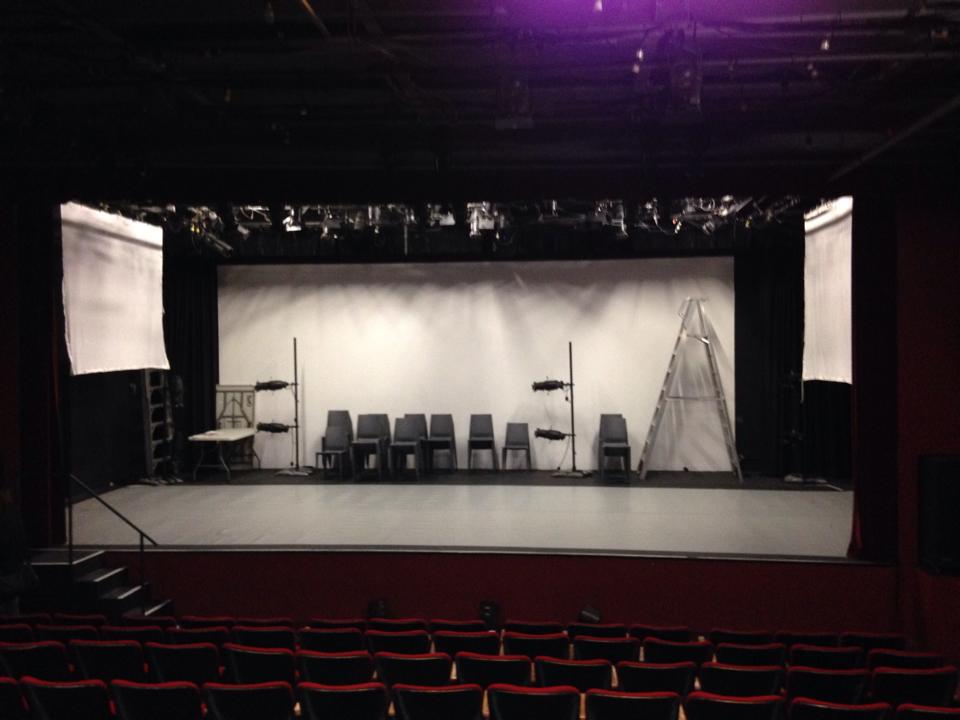
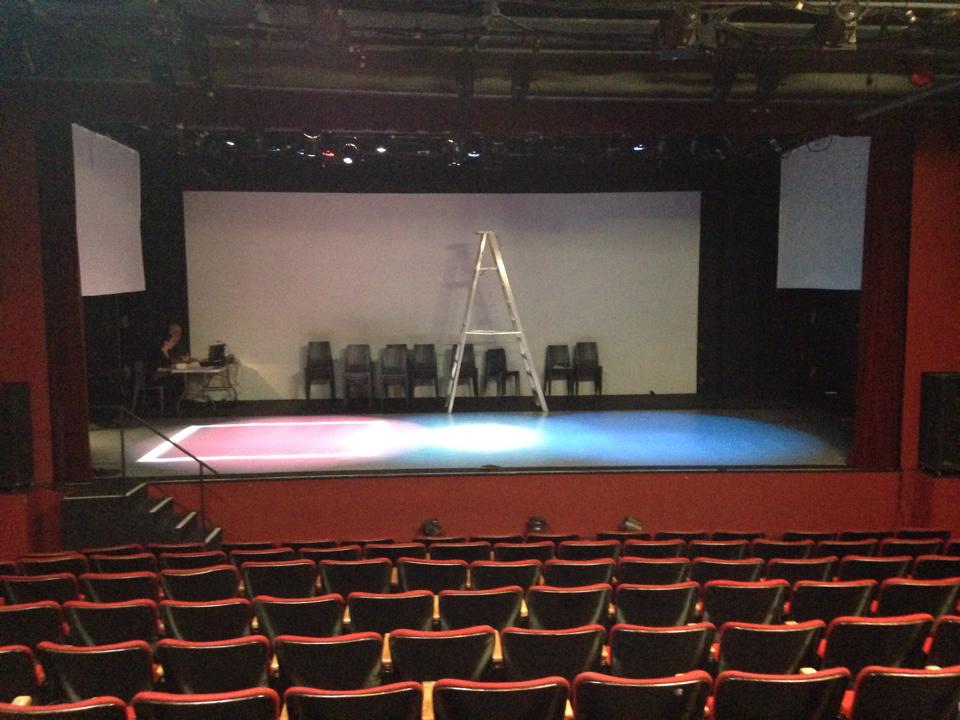
With only 3 days until our public presentation, things are busy, but coming together. The interactive script is live online as a Google Form that can be filled out by the public. There’s still time to participate.
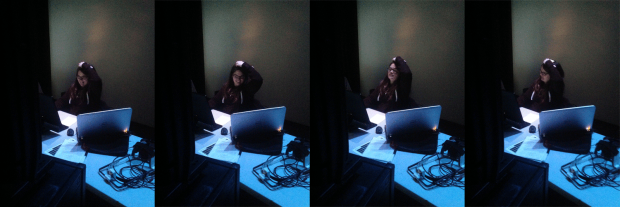
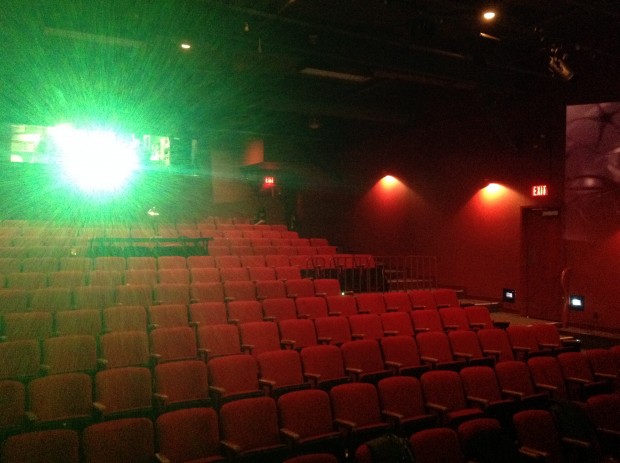
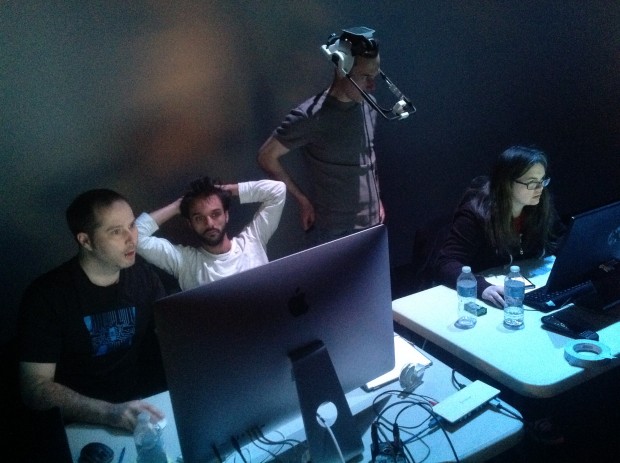
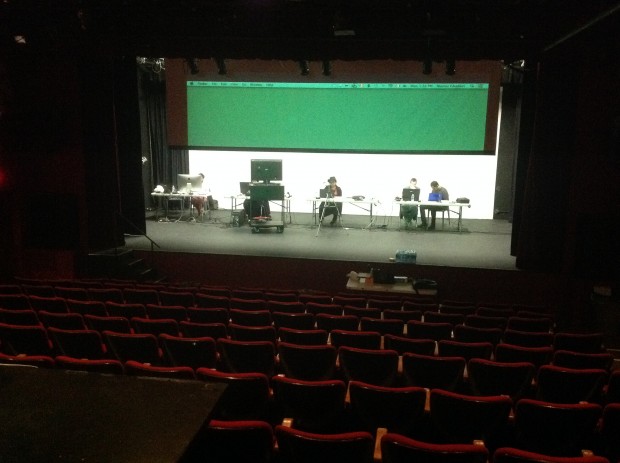
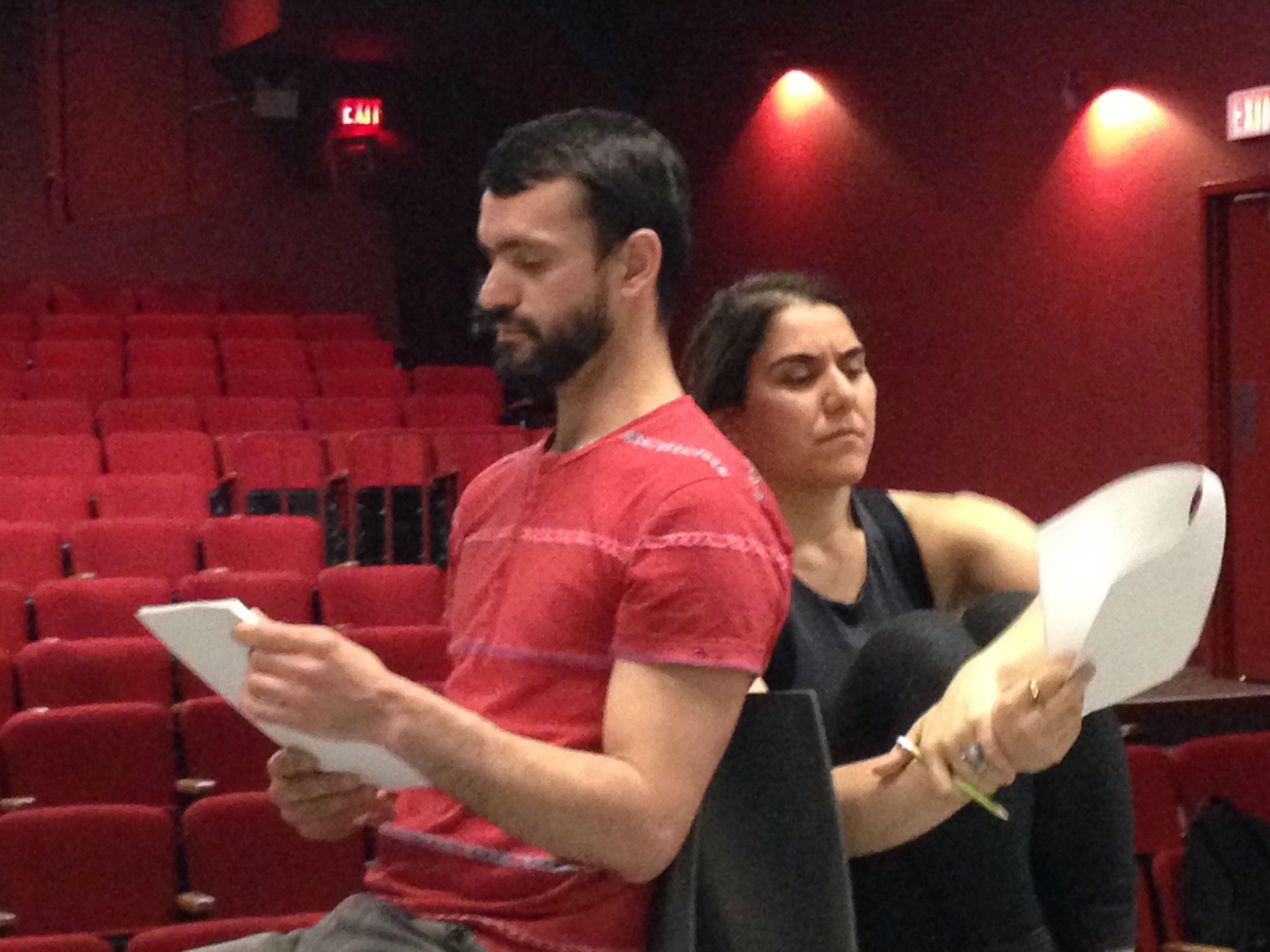
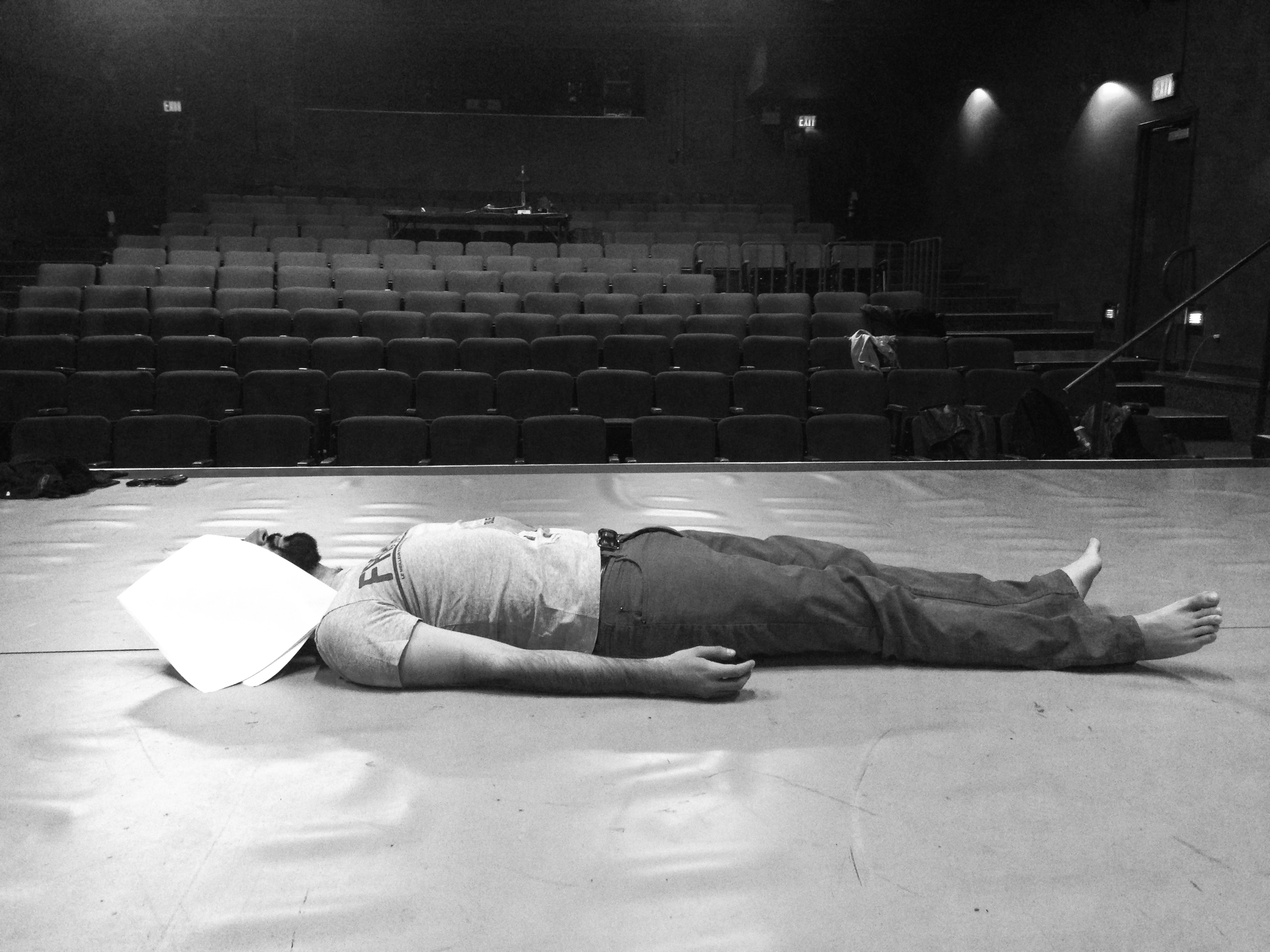
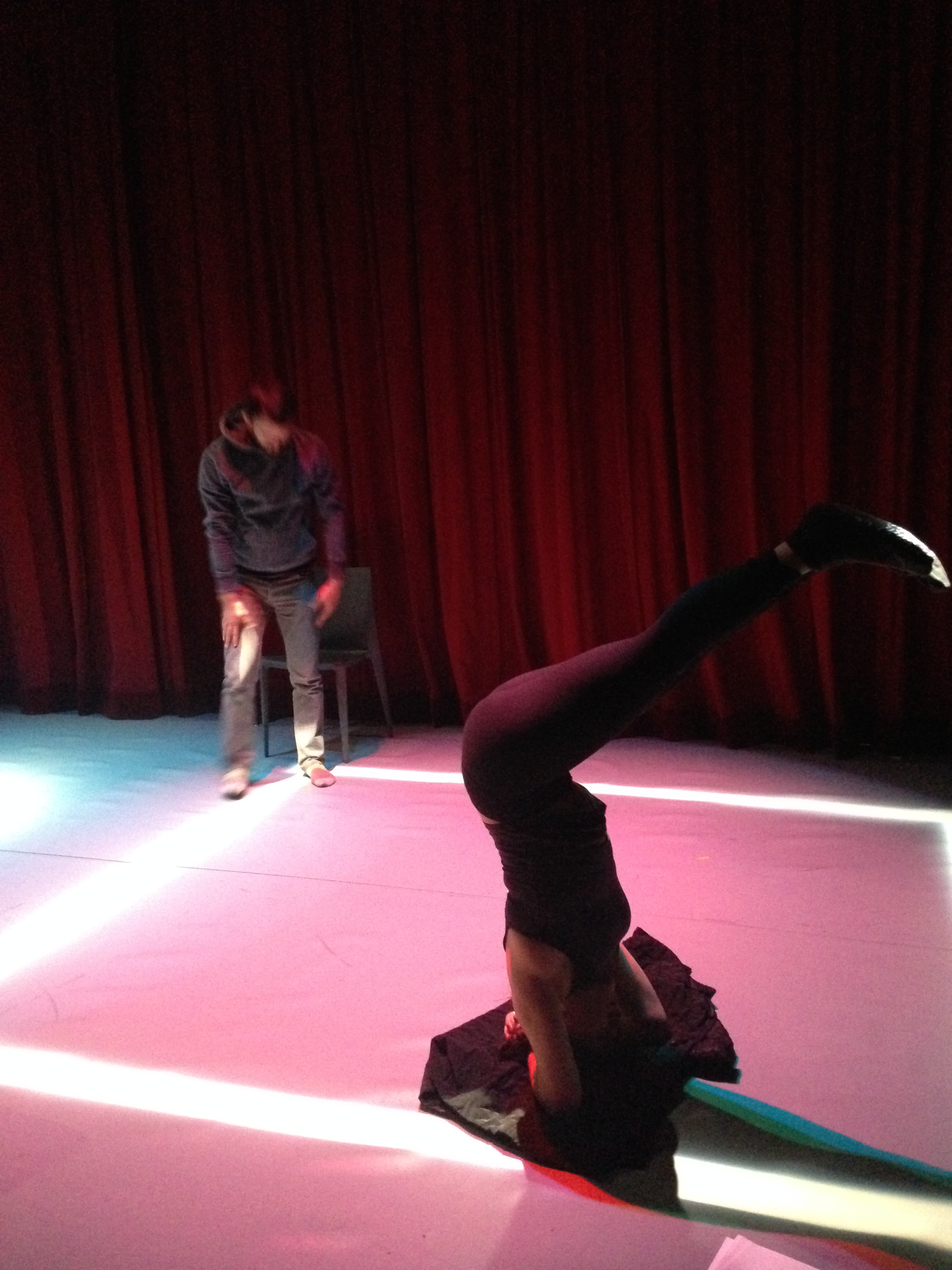
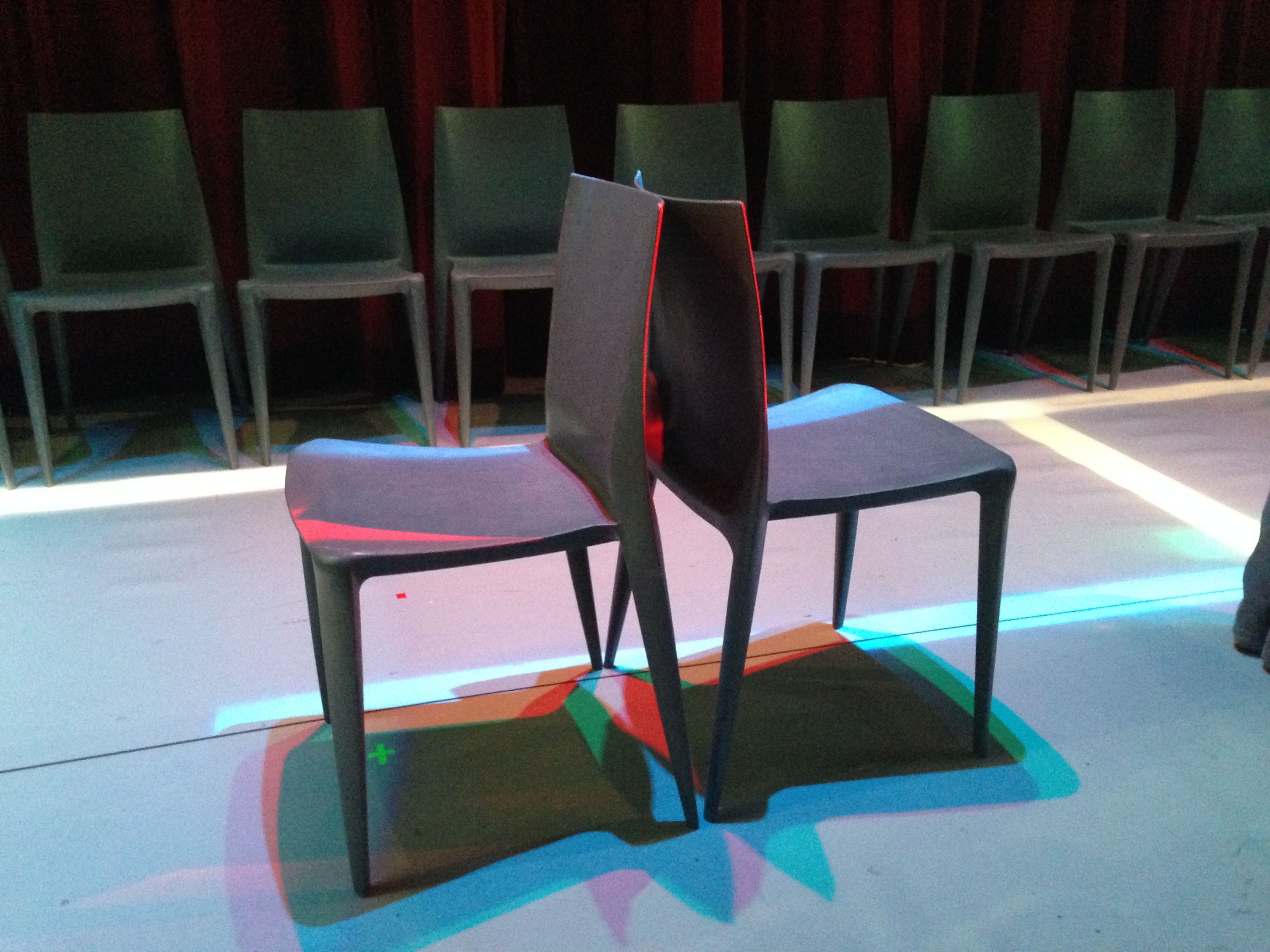
Live on stage, the lights are set as rehearsals go into their third day. Here are some images from the Studio Theatre with my collaborators Manolo Lugo & Maryam Taghavi:
#legacy opened and closed on April 12th. To say that it was a moving experience would be the understatement of the year. The opportunity to work with these incredibly brave and talented women in such a supportive atmosphere is a process that I will cherish for a long time. If you want to see more about how the week-long residency looked, check out my Storify post. As a follow-up post, I’ve decided to share the three letters that closed the piece–one from each of the women. They are powerful, poignant, and reflective of a legacy that transcends Twitter. This week, I’m sharing Judith’s.
Do you remember the story I told you about my childhood teddy bear, John? I took him everywhere with me.
It was war time when I was born and my father, who was in the RAF, was away from home. He was given special leave to come home for a few days with the family. He brought John with him. John was my first gift. I loved my bear and nothing in the world would have made me part with him at any age. He helped me with my homework, came on family picnics, went to bed with me and even helped me through my nursing training.
BUT…..
During our removal to Canada, he was packed in one of our big shipping crates. Alas it was John’s crate that went missing during the long Atlantic sea crossing. I had to fashion my life as an immigrant in a strange country without him.
When I told you the story of John, my old teddy bear, I never dreamed you would be paying so much attention to it, because you were only five years old. You asked me to draw a coloured picture of John so that you could find me a new bear that looked like him. I was then presented with John II. Now ten years later, I am involved in a project that has made me remember all of this.
For me, John ll is as good, or better, than John l, because it was given as a legacy of love.
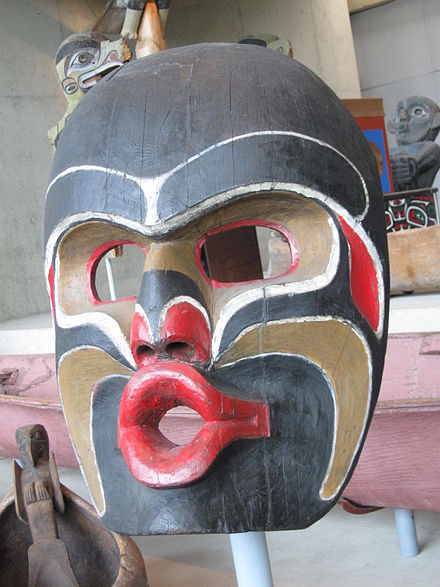
As far as we’re aware, Faster than Night is one of the first handful of theatre productions in the world to use facial performance capture live on stage. But while from one perspective it is cutting-edge technology, it is also just the latest mutation of an artform that has been used in theatre for millennia: the mask.
Kwakwaka’wakw mask “Face of Dzunuk’wa” (photo: Leoboudv/UBC Museum of Anthropology)
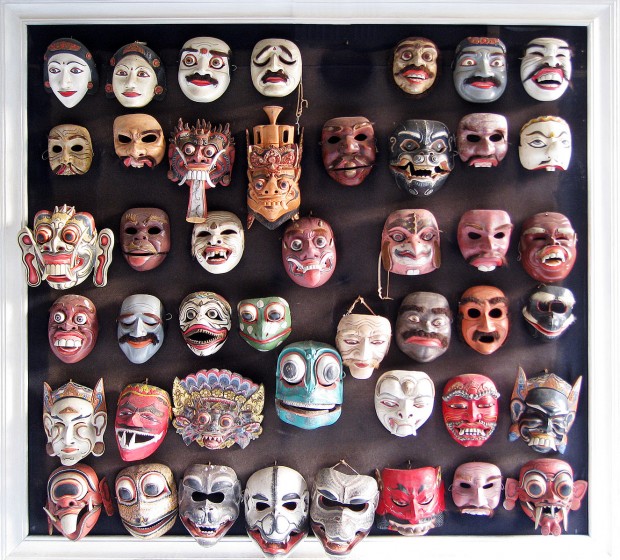
A mask is simply non-living material sculpted into the shape of a face. It can allow a human performer to transform into a different human, or an animal, or a supernatural being.
“Ko-jo” (old man) Noh theatre mask (Children’s Museum of Indianapolis)
It can allow a young person to play an old person, or a man to play a woman.
In the Balinese tradition of topeng pajegan, a single dancer portrays a succession of masked characters with different personalities: the old man, the king, the messenger, the warrior, the villager. A whole epic story can be told by one skilled performer, simply by switching masks and physicalities.
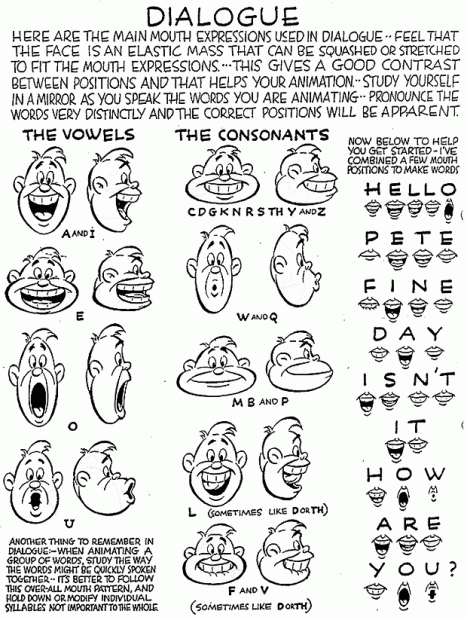
Just as animation is a series of still drawings, or film is a series of still photos projected fast enough to create the illusion of movement, real-time facial capture is fundamentally a process of switching and morphing between dozens of digital “masks” – at rates of up to 120 frames per second.
But how does real-time facial capture actually work?
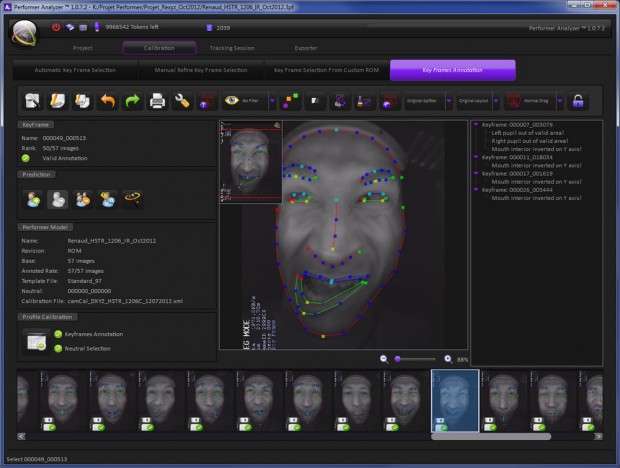
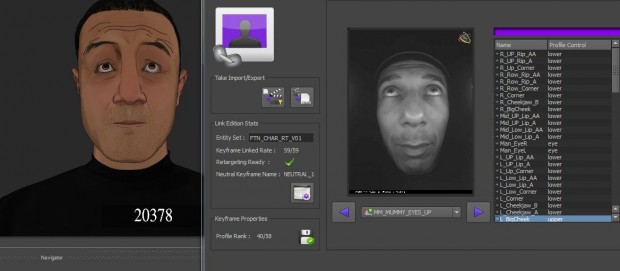
We’re working with the Dynamixyz Performer suite of software, which takes live video from a head-mounted camera, and analyzes the video frames of the actor’s face. In the image below, you can see it tracking elements such as eyes, eyebrows and lips.
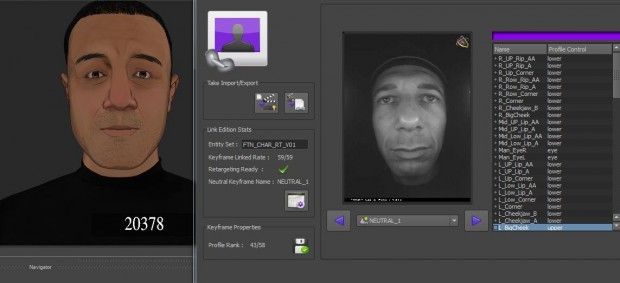
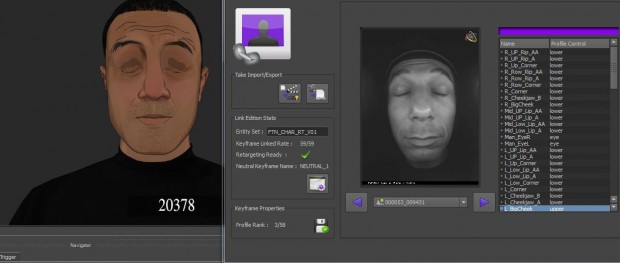
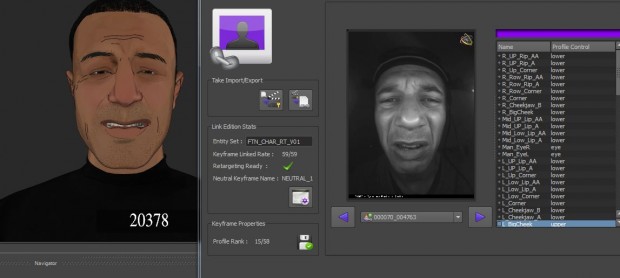
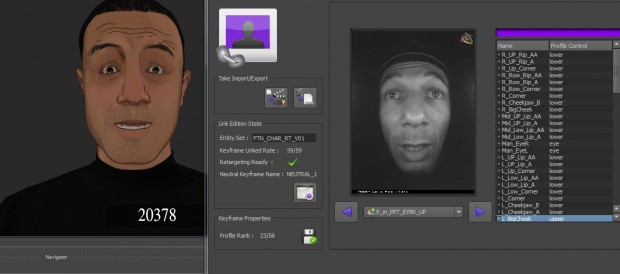
For each frame of video, the software finds the closest match between the expression on the live actor’s face, and a keyframe in a pre-recorded library of that actor’s expressions, called a “range of motion”. That library keyframe of the actor corresponds to another keyframe (also called a blendshape) of the 3DCGI character making the same expression. By analyzing these similarities, the software can “retarget” the performance frame by frame from live actor to virtual character, morphing between blendshapes in seamless motion. This process is called morph target animation.
Here are a few rough first-draft keyframes for Faster than Night. On the right is a head-cam video frame of Pascal Langdale, and on the left is an animation keyframe by Lino Stephen of Centaur Digital:
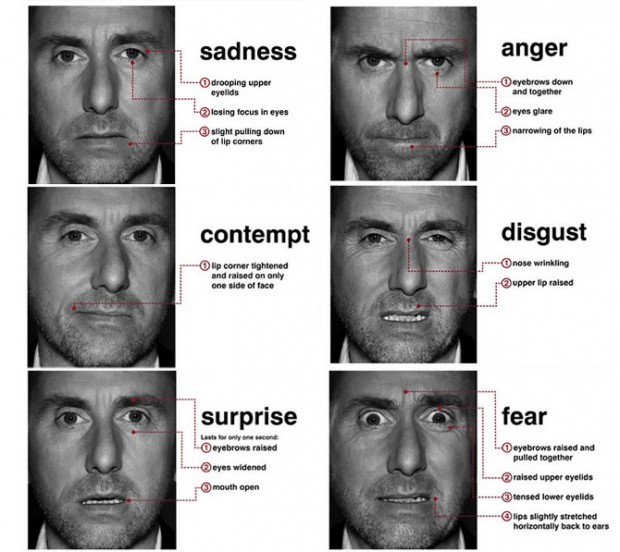
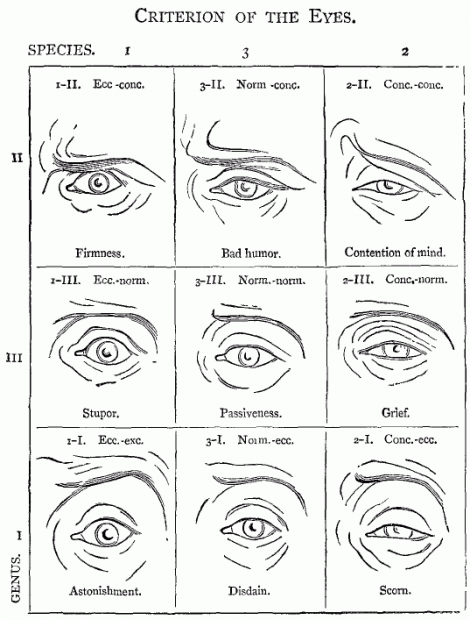
There are dozens more expressions in the “range of motion” library for this particular actor / character pair. Some of them are “fundamental expressions”, drawing on the Facial Action Coding System developed by behavioural psychologists Paul Ekman and Wallace V. Friesen in 1978:
Tim Roth played a character inspired by Paul Ekman in the 2009 TV series Lie To Me
Other facial “poses” convey more subtle or secondary expressions…
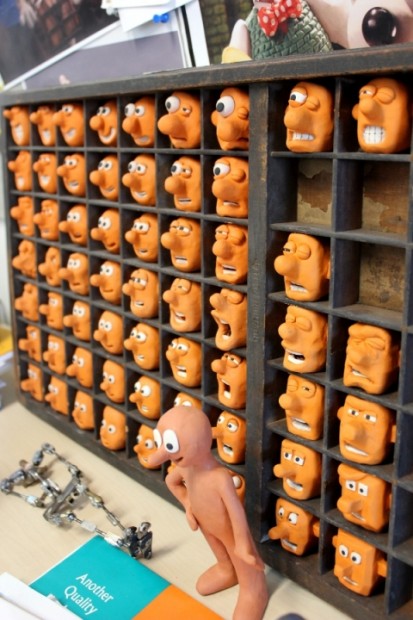
This image of Aardman Animation’s stop-motion character Morph gives a tangible metaphor for what’s going on inside the computer during the real-time animation process:
With each frame, a new head is taken out of its box and put on the character, just like the topeng performer switching masks.
The cumulative effect creates the illusion of speech, of motion, of emotion… of life:
A longer post is coming soon with details on the 3D facial model work being done by Centaur Digital and Dynamixyz, but to tide you over, here are a few more elements from our talented creative team.
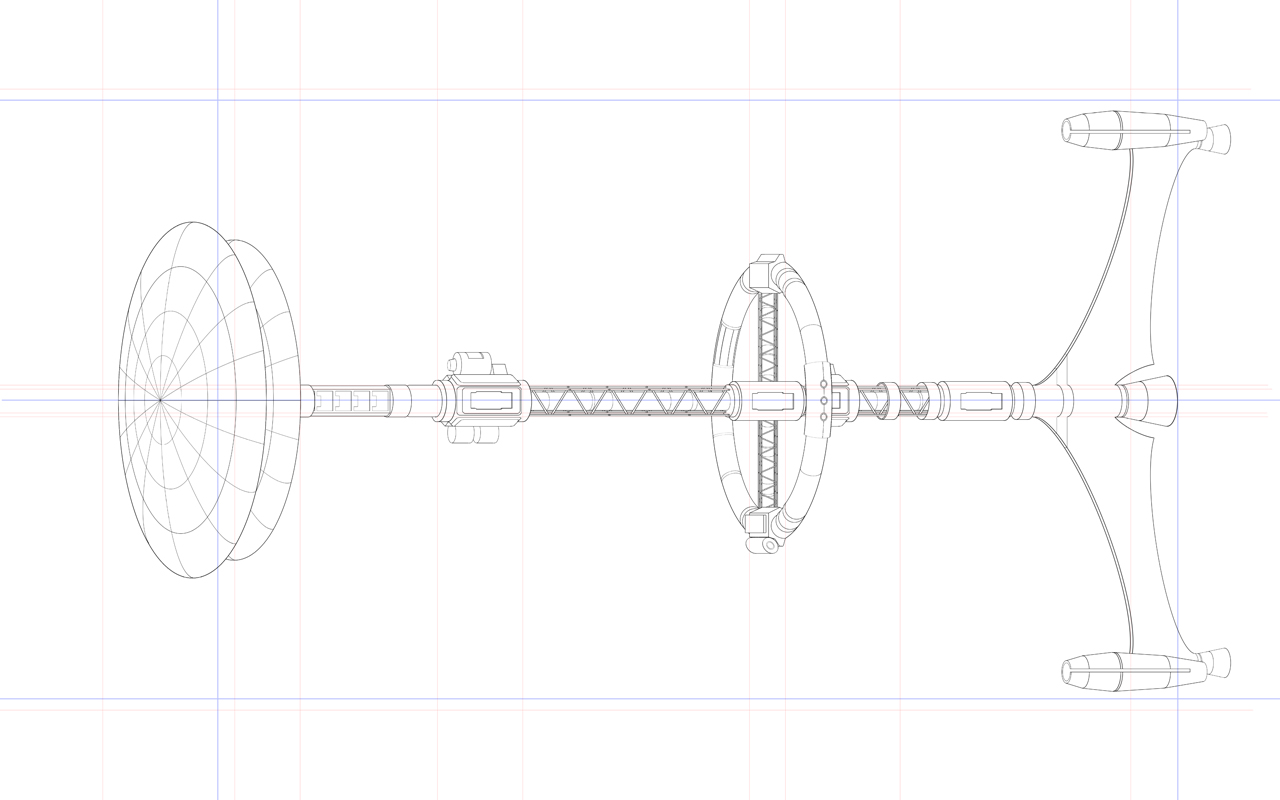
First up, the design of the starship Envoy by Mike Nesbitt and Caroline Stephenson of Capture Scratch:
And our latest piece of concept art was developed by Clementine Konarzewski, who is playing the voice of astronaut Caleb Smith’s daughter, Katy, age 6:
“After the years and years of weaker and waterier imitations, we now find ourselves rejecting the very notion of a holy stage. It is not the fault of the holy that it has become a middle-class weapon to keep the children good.”











Recent Comments