I sat in the same bar for 7 years, from 5 a.m.
(the day bartender let me in 2 hours early)
to 2 a.m.
sometimes I didn’t even remember going back
to my room
it were as if I were sitting on the barstool
forever
I had no money but the drinks kept
arriving
to them I wasn’t the bar clown
but the bar fool
but at times a fool will find a greater
fool to
admire him,
and,
it was a crowded
place
actually, I had a viewpoint: I was waiting for
something extraordinary to
happen
but as the years wasted on
nothing ever did unless I
caused it:
broken bar mirrors, a fight with a 7 foot
giant, a dalliance with a lesbian, many things
like the ability to call a spade a spade and to
settle arguments that I did not
begin and etc. and etc. and etc.
one day I just upped and left the
place
like that
and I began to drink alone and I found the company
quite all right
then, as if the gods were bored with my peace at
heart, knocks began upon my door: ladies
the gods had sent the ladies to the
fool
and the ladies arrived one at a time and when it ended with
one
the gods immediately–without allowing me any respite–sent
another
and each began as a flash of miracle–even the bed–and the
good ended up
bad
my fault, of course, yes, that’s what they told
me
but I remembered the 7 years in the bar, I hardly ever bedded
down with anybody
the gods just won’t let a man drink alone, they are jealous of
his simple strength and salvation, they will send the lady
knocking upon that door
I remember all those cheap hotels, it were as if the women
were one: the delicate little rap on the wood and then:
“oh, I heard you playing that music on your radio…we’re
neighbors, I’m down at 603 but I’ve never even seen you in
the hall…”
“come on in…”
and there go your balls and your sanctity, Men’s Liberation,
they say, is not needed
and then you remember the bar
when you walked up behind the 7 foot giant and knocked his
cowboy hat off his head, yelling:
“I’ll bet you sucked your mother’s nipples until you were
12 years old!”
somebody in the bar saying: “hey, sir, forget it, he’s a mental
case, he’s an asshole, he doesn’t know what he is
saying!”
“I know EXACTLY what I am saying and I’ll say it again:
I’ll bet you sucked…”
he won but you didn’t die, not at all the way you died when the
gods arranged to get all those ladies knocking and you went for
the first flash of miracle
the other fight was more fair: he was slow, stupid and even a
little bit frightened and it went well for quite a good while,
just like with the ladies those gods
sent
the difference being, I thought I had a chance with the
ladies
created and performed by Deanna Fleysher
FRI, May 30 @ 8PM
SAT, May 31 @ 6PM
SUN, June 1 @ 4:30PM
at the Pia Bouman School, 6 Noble Street
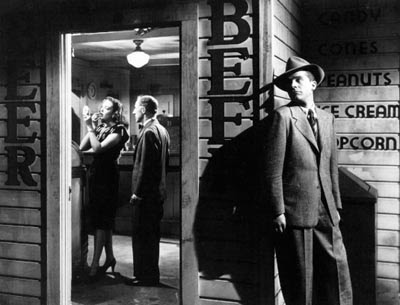
Tickets hereThe director of international hit Red Bastard comes back swinging with BUTT KAPINSKI. Think it’s a solo show? Think again. Private eye Butt Kapinski invites you to co-star in a film noir fantasy. This funny, filthy, fully-interactive ride is riddled with sex, sin, shadows and subterfuge. Let’s kick reality to the curb and play in a world of dark dreams and bad similes.Winner: Most Orgasmic Production and Best of Fest (Hollywood Fringe 2013), Volunteers Choice Award and Cultch Award (Vancouver Fringe 2013), Official Selection: Dallas Solo Fest 2014, UNO Festival 2013 and Out Of Bounds Festival 2012. ADULTS ONLY!
Check out the trailer here.
For more information visit the show’s website here.
“Super funny and astonishingly inventive. Like watching a trapeze artist soar without a net…”
~ Artsbeat LA
and an ocean tumbled by with a private boat for Max
and he sailed off through night and day
and in and out of weeks
and almost over a year
to where the wild things are.
And when he came to the place where the wild things are
they roared their terrible roars and gnashed their terrible teeth
and rolled their terrible eyes and showed their terrible claws
till Max said “BE STILL!”
and tamed with the magic trick
of staring into all their yellow eyes without blinking once
and they were frightened and called him the most wild thing of all
and made him king of all wild things.
“And now,” cried Max, “let the wild rumpus start!”
“Now stop!” Max said and sent the wild things off to bed without their supper.
And Max the king of all wild things was lonely and wanted to be where someone loved him best of all.
~ Where The Wild Things Are, Maurice Sendak
Image:
Sound:
FeverGraph Theatre Company
Presents a variation of
John Osborne’s
Look Back in Anger
A physical and auditory deconstruction of John Osborne’s classic text
Continues this week – EXTENDED BY 1 DAY!
Wednesday, September 25th – Sunday, September 29th, 2013
Wednesday-Saturday at 8pm, Sunday at 2pm
1093 Queen St. West
Tickets: $20 regular $15 arts worker/student/senior plus applicable service charges
Ready to hit the studio and shit all on your mixtape
Nah, literally, shit all on your mixtape
Wipe with the credits, leave stains on the Jewel case
In just two takes, dog, the booth’ll get souffléd
You’re hiding something like a toupee
Truthfully, my friend: touché
You gon’ get exposed like an up-and-coming model
And to me your label seems like one of them pageant mommas
So guess who’s the little bitch? That’s you
You must suck a lotta dick: That’s true
Four days will quickly steep themselves in nights;
Four nights will quickly dream away the time;
And then the moon, like to a silver bow
New bent in heaven, shall behold the night
Of our solemnities.
-William Shakespeare, A Midsummer Night’s Dream
IMAGE:
SOUND:
Nina Kaye is the Artistic Director of Unspoken Theatre Company. She is a Jill-of-all-trades, with experience as a playwright, director, producer, costumer, dramaturg, and actor.
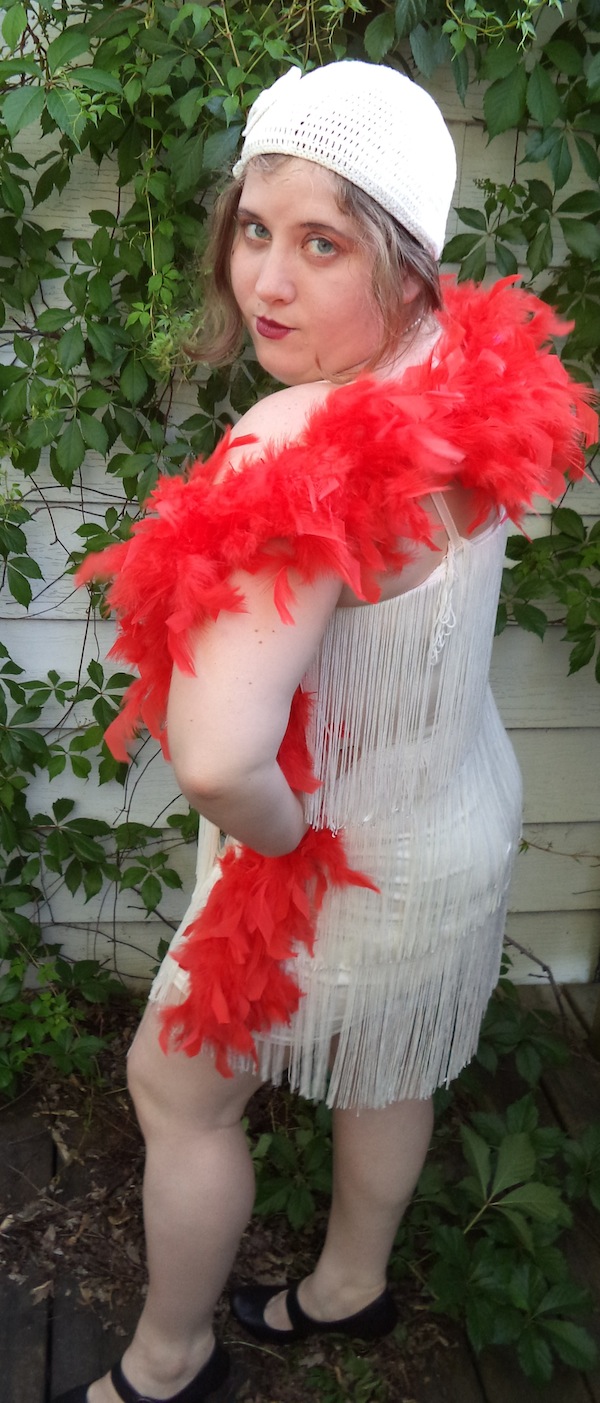
Unspoken Theatre presents Let’s Misbehave: A 1920’s theme night of music, theatre, dance, and film!
Join them on Friday June 28 as they celebrate the Roaring Twenties in honour of their new play in development, Walking Around in a Dream by Natalie Kaye.
Let me not to the marriage of true minds
Admit impediments. Love is not love
Which alters when it alteration finds,
Or bends with the remover to remove.
O, no! It is an ever-fixed mark
That looks on tempests and is never shaken;
It is the star to every wand’ring bark,
Whose worth’s unknown, although his height be taken.
Love’s not Time’s fool, though rosy lips and cheeks
Within his ending sickle’s compass come;
Love alters not with his brief hours and weeks,
But bears it out even to the edge of doom.
If this be error and upon me proved,
I never writ, nor no man ever loved. – William Shakespeare, Sonnet 116 –
“Women don’t have penis envy; men have pussy envy.”
~ S.C.U.M Manifesto, Valerie Solanas
Image:
Sound:
Nina Gilmour stars in Death Married My Daughter alongside Danya Buonastella, written in collaboration with Michele Smith and Dean Gilmour.
Death Married My Daughter is the story of two Bouffons who come back to settle an old score. Tonight it’s the Revenge of Ophelia and Desdemona: Poetic and grotesque; Charming and disturbing.
Toronto Festival of Clowns 2013 – May 29-June 2 @ The Pia Baumen Studio Theatre (6 Noble st) Tickets are $15 here.
Sherlock Holmes and Dr Watson went camping. They pitched their tent under the stars and went to sleep. Sometime in the middle of the night Holmes woke Watson up and said: “Watson, look up at the sky, and tell me what you see.” Watson replied: “I see millions and millions of stars.” Holmes said: “And what do you deduce from that?” Watson replied: “Well, if there are millions of stars, and if even a few of those have planets, it’s quite likely there are some planets like Earth out there. And if there are a few planets like Earth out there, there might also be life.” Holmes said: “Watson, you idiot, it means that somebody stole our tent.”
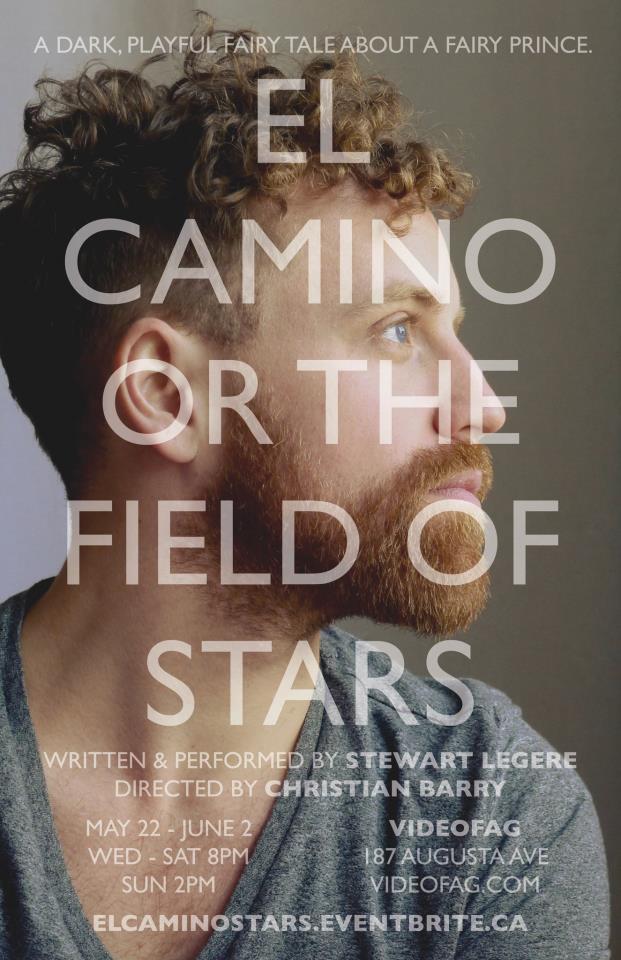
A dark, playful fairy tale about a fairy prince. As the unnamed protagonist in his new solo show, Stewart Legere weaves together tales of a doomed relationship, a trip to Italy gone wrong, and a mysterious fascination with El Camino Santiago de Compostella, an ancient walking pilgrimage through France and Spain. Working through fear, awkwardness, and shame, he charms, cajoles, pushes and pulls, provokes, and consoles his way through stories of love, loss, and the complex struggles of a young queer couple dealing with internalized homophobia.
Because this space is a space where we pretend we are pretending
But really we are telling the truth
Our subjective truths
Image:
Sound:
Chad Dembski performs ok/ok/ok which plays with Cathy Gordon’s HAMMER for 2 SHOWS ONLY Friday May 3 & Sunday May 8PM @hub14.
These are shows built for studio audiences.
Intimate. Simple. A bit messy. Not quite casual enough for a bar. Not quite big enough for a stage. Good for the studio, a place where we can work things through…
Sunny needs to talk about what’s happening, but he has to do it where no one will find him. Because Sunny, aka rihannaboi95, made some videos and while yeah, they’re getting lots of hits, some people at school found them too and now the eggshell world he so carefully treads is threatening to collapse beneath him.
Cloistered within the bedroom of his friend Keira, a Shopper’s makeup queen, Sunny records a video for his loyal viewers, invoking his YouTube namesake when he needs her most.
Dealing candidly with bullying, queer identity, and the pain of self-invention, Jordan Tannahill’srihannaboi95 invites viewers to watch a live performance from the privacy of their own computers. Directed by Zack Russell and featuring Owais Lightwala as Sunny, rihannaboi95 will be dispatched nightly from a Toronto bedroom at 8pm from April 23rd – April 28th 2013.
“After the years and years of weaker and waterier imitations, we now find ourselves rejecting the very notion of a holy stage. It is not the fault of the holy that it has become a middle-class weapon to keep the children good.”










Recent Comments