Last Friday I had the pleasure of interviewing Michael Healey, whose play Proud is currently onstage at The Berkeley Street Theatre.
On beer, small people, confessions, and plays I haven’t seen
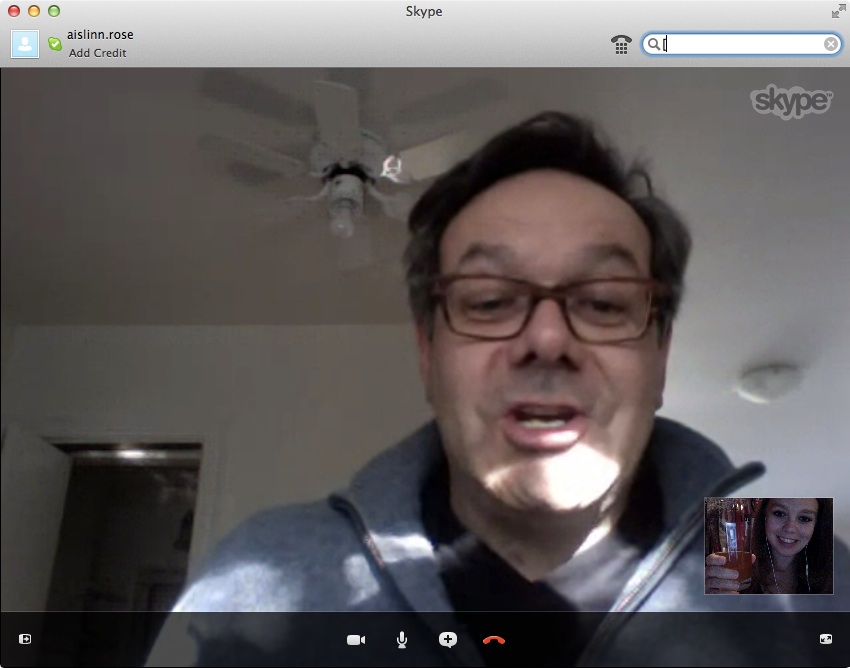
AISLINN: Thanks for Skyping with me today. I’m actually interviewing you from my local, The Mugshot Tavern… my favourite little pub at Bloor & Keele, where I can walk in and the owner will say, “Aislinn, I have a great new beer on cask for you”.
MICHAEL: That’s the sweetest thing! I don’t have a local… I don’t get out of the house much.
AISLINN: Well, you do have 2 small people…
MICHAEL: That’s right… who insist I stay at home. Oh, I’m so envious right now!
[He has spied me sipping my pint.]
AISLINN: Let’s talk about your play. I have a confession to make… another one.
MICHAEL: [Laughs] It’s just all confessions with you…
AISLINN: That’s the old Catholic in me… all the guilt and none of the faith.
So… Proud is the first Michael Healey play I’ve ever seen. Partly due to the fact I lived in Australia for four years…
Can you give me a bit of a backdrop for the trilogy? [Courageous, Generous, and now Proud]
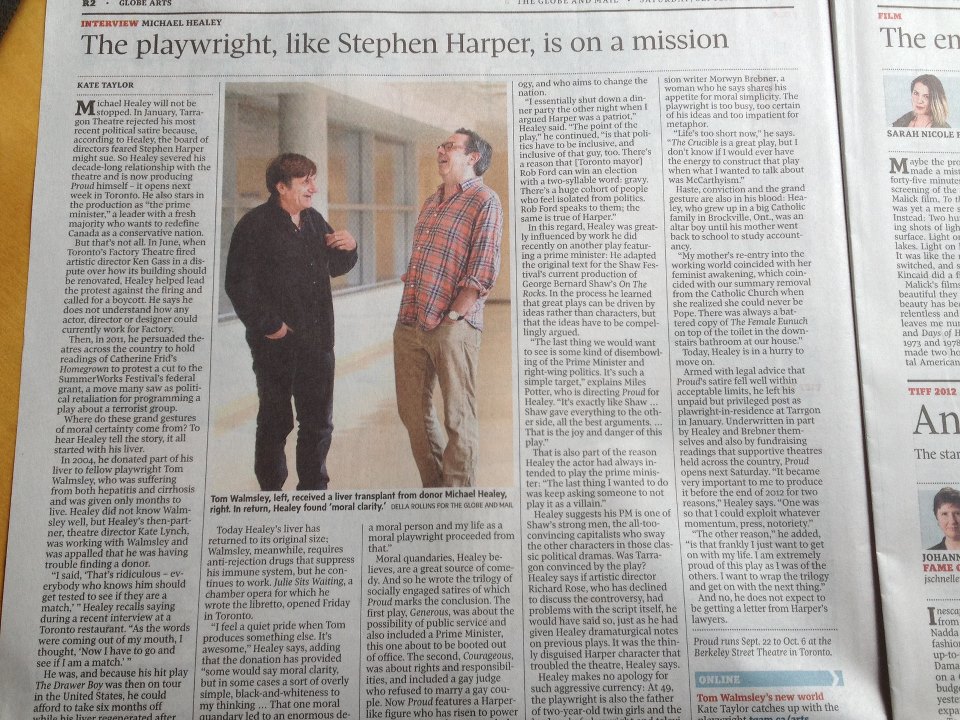
Tom Walmsley & Michael Healey in the G&M Print edition
MICHAEL: The idea for the trilogy started 8 years ago when I gave Tom Walmsley part of my liver. I’d say prior to that my plays were interested either in form, or, in the case of The Drawer Boy I was trying to learn how to write a two act comedy structure. Or in the minutia of my own psychology. The couple of plays after the Drawer Boy were about the interesting corners of my own feelings and experiences, and that event [the liver donation] kind of turned my gaze outward.
This play is about what it is we want from our political institutions.
AISLINN: So what do YOU want from our political institutions?
MICHAEL: I guess I want to be offered ideas that I haven’t already heard, and I want to be inspired by those ideas. I want somebody to articulate a notion of our society and our country that’s larger than the one that I currently possess.
AISLINN: So your… in terms of the ideologies out there you’ve got the group of people who want the guy they can have a beer with… or the manager versus the leader. So you’re looking more for the leader than the guy who’s going to just manage the finances.
MICHAEL: I guess that’s right. The guy that I want is a pretty good manager too…
Fiscal Conservativism
AISLINN: Which leads me to some of the questions for you that came to me via Facebook. What is your response to the notion of someone being “fiscally conservative and socially progressive?
MICHAEL: Well… I don’t see any incompatibility with those two ideas living together. How it works out, it’s always the distance between your ideals and what’s possible. Politics is the art of the possible. The difference between what you aspire to and what you can manage is where the truth lies. So… if there is any contradiction between those two statements, the way that you work out those contradictions is the way… is the kind of politician that you become… if that’s coming from a politician.
If it’s coming from a citizen, then… I think everybody is capable of maintaining ideas that aren’t necessarily resolved.
AISLINN: But what do you think “fiscally conservative” means these days?
MICHAEL: Well the problem is that fiscally conservative these days means “good with other people’s money” and the fact is that progressives are completely capable of being good with other people’s money, but that right has managed to co-opt that notion and own it.
AISLINN: And if we look at the recent big spenders in government across North America, I just don’t understand why those notions still exist…
Is Michael Healey a Soothsayer?
AISLINN: So now I want to ask you about some of the things that happen in your play. But first I want to ask… are you a soothsayer?
MICHAEL: [Laughs] You know… none of things that things that have come up recently were that hard to guess about. You know… the thing about the abortion bill in the play, and the guy’s abortion bill… or quasi abortion bill that got defeated in the house… since the Conservatives have been in power, backbenchers have floated four or five different Private Members Bills on Abortion… controlling abortion.
The Abortion Bill I describe in the play is verbatim to the bill that was brought up in, I think, 2007 by some guy. So, I may look clever, but these things are not terribly far fetched. But the timing is awesome. It’s great to get the play on at the moment that the House is coming back to it and these things are coming back to boil again.
On merging the left
AISLINN: I’m curious about your thoughts on voter cooperation. There’s a line in your play that gets a good laugh about the merging of the progressive parties… so I’m curious about how you feel about this notion of some kind of cooperation between the progressive parties. Or… the non-conservative parties…
AISLINN: I don’t know why you would mention him in this moment. I joke.
MICHAEL: My basic feeling about it is that anything that streamlines discussion… debate… is in the long-term, bad for politics. As I say in the play… once they unified the right, maybe it became inevitable that eventually the left would unite.
Cullen's NDP Leadership campaign
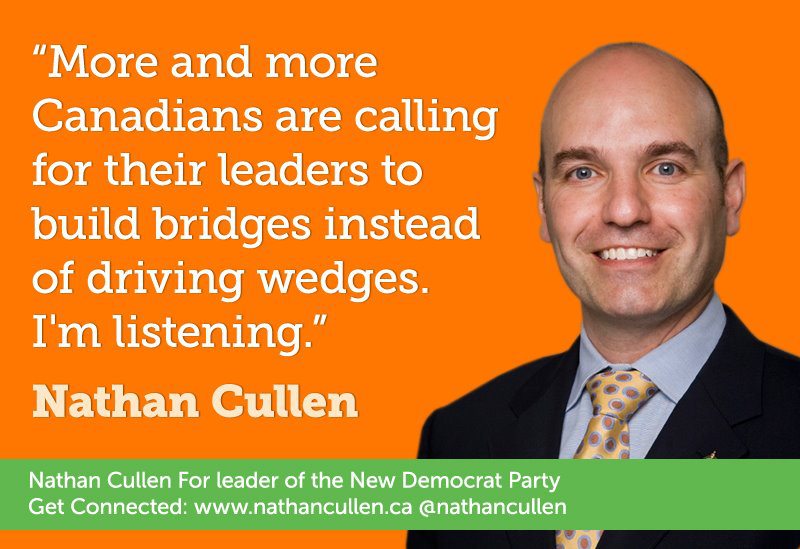
AISLINN: But what if we’re not talking about merging? Let’s talk Nathan Cullen’s plan – and to clarify for when I do the transcription – to look at those ridings where it looks like if the Liberals and NDP were to come together they could defeat a sitting Conservative, that you have run-off ballots in the lead-up to the election to determine whether it should be a Liberal or an NDP that should run in that riding for the election.
MICHAEL: Right…
AISLINN: To get to a point where you get the Conservatives out, and then we bring in voter reform where it’s no longer this first-past-the-post system, so we can go back to running whatever candidates we want, and we have some kind of ranked ballots, or the proportional representation that Ontario soundly voted down a few years ago because no one knew what that complicated ballot meant…
MICHAEL: … all these ideas that everybody floats when they’re not in power!
AISLINN: Right, yes… as you say in your play.
MICHAEL: … and then just rejects!
I don’t know. Isn’t that just a sad way to have to beat these people? Isn’t that a kind of collusion, doesn’t that limit… ultimately limit democracy? I mean, I understand what it means in practical terms… I understand… generation upon generation of Harper conservativism… until somebody spends 35 years, the way that he spent 35 years putting an idea together and building a coalition among the people in the country… until somebody spends the time doing that… don’t we just have to wait? Don’t we just necessarily diminish the concept of democracy every time the Liberals and the NDP collude in a riding. Don’t we?
[silence]
AISLINN: I’m a little depressed. Are you telling me that we have 35 more years of this to go?
MICHAEL: [Laughing] I think… well… I’ll go this far: they’ll win another majority in the next election. Beyond that I’m not going to say. So 2015, for sure. In my opinion. I just don’t see anybody… I just don’t see it… there is no short cut. And he knew that. He learned that, and he put in the time. And there is no short cut to creating a message that a wide swath of the middle of the country can get behind.
What are the requirements for running for office?
AISLINN: So I want to talk briefly about the female character in your play, Jisbella. She’s a former manager of a St. Hubert in Quebec. I’m curious to know what you think the qualifications of an MP should be.
MICHAEL: Well, I don’t think that there should be any beyond the ones that Elections Canada has… whatever they are. I don’t know what the qualifications are really. I mean, there are a lot of lawyers in Ottawa. It’s probably right that there are a lot of lawyers in Ottawa because it’s where they make laws.
I for one, love it when they get a Monte Solberg… is that who I’m thinking of? Who was the Reform MP who never took off his fucking cowboy hat?
MICHAEL: I just think, you know, it’s democracy and it’s messy and stupid, and occasionally it coalesces and awesome things happen, but in the main it’s messy and stupid. I think that the people who stand for election should reflect the diversity of that messiness and stupidity.
AISLINN: Right… and then I guess from that pool, we hope the leader will arise. That leader who will inspire us and give us a bigger vision.
MICHAEL: That’s right. It’s a frustrating and inevitably organic process.
We're not saying good looks don't matter...
AISLINN: Okay! So then what do you think of the new Trudeaumania?
MICHAEL: Well yeah! He doesn’t have his father’s depth…
I’m not saying that the hair and the good looks don’t matter, and the fact that he’s charming doesn’t matter…
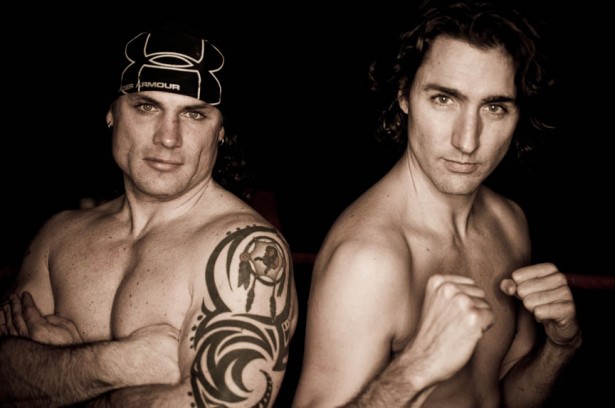
AISLINN: … and a good boxer!
MICHAEL: … sorry?
AISLINN: … and a good boxer.
MICHAEL: And a good boxer! I’m just saying that 10 minutes in a ring, so to speak, with Harper in one of these debates and we’re just going to see… you’ll just see.
My job that he always wanted, and why he was glad to see Aaron Sorkin go
MICHAEL: I find it instantly intimidating to speak to you… you remind me of that… because, I mean, I’m talking about things that you have a kind of legitimacy about that I will never have.
AISLINN: Were you a fan of the West Wing? You do seem to speak with some legitimacy. I mean, yes, I’ve seen some of this stuff, but it does ring quite true to me…
MICHAEL: Well, I’m probably the only person in the world who preferred the West Wing after they kicked off Aaron Sorkin, and they hired a bunch of former White House flacks to come in and write… because the stories instantly became more true to politics in that country.
AISLINN: You said something on Facebook about me having the job you always wanted… surely that’s not true.
MICHAEL: It is… when I was 12 years old I explored the possibility of becoming a page at the Ontario Legislature… I was one of those kids, and then it never came to fruition.
In some ways, that world does fascinate me… I think the same things that fascinate me in the theatre are the same things that fascinate me in that world… the distance between aspiration and reality, and the drama and comedy that are available inside that gap.
The thing I don’t have patience for is consensus building… the art of the possible. I think I’d get very frustrated very quickly with the glacial pace of a legislative agenda.
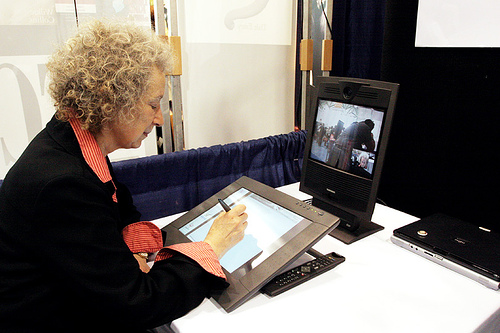
Atwood signing remotely via "longpen"
AISLINN: Did you know about the autopen, did you know there was such a thing?
MICHAEL: I guess I was. I assumed these people don’t sign their own letters anymore. Isn’t Margaret Atwood’s thing just a long-distance version?
AISLINN: But Margaret Atwood… she’s still signing from long-distance. She’s still doing the arm movements across the world to do the signing. The autopen is someone like me sitting in a room with a big stack of letters, and a big wonky wheel that turns around and makes the pen move to look like the signature.
But every now and then I’d be working on a letter saying “we’re sorry we have to cut down the tree on your lawn”, and every now and then I was able to save a tree and say, “no, I don’t like this answer…”
MICHAEL: Would you really do that?
AISLINN: Oh yeah, if I got a letter where I’d see we were giving the standard response to what didn’t seem like a standard situation, I’d pull it and talk to the appropriate person in the ministry to see if we could get a different result for that person.
MICHAEL: So really, in a lot of ways, power resided with you.
AISLINN: Oh yeah, totally…
[Laughter]
MICHAEL: I’m kidding, but it’s also true…in the same way that, you know, that your leg works because of its joints… you were right there in that moment, you were the only person with an engaged brain in that moment between constituent and elected official.
AISLINN: I think, for me, that was part of my survival in that job and feeling awful about being there. But if I could walk away at the end of the day where I’d fixed something for someone… I could feel okay about.
Off topic and onto Factory Theatre…
AISLINN: So I do have one final question for you. It’s off topic.
For me, I intend to continue supporting Factory Theatre, and the new mission of Nina & Nigel as they work on the creation of their new season.
I wonder what you would like to say to someone like me who intends to continue with that support.
MICHAEL: I think you absolutely should. I think that the reason I’m so categorical about my reaction to Ken’s firing was because I was around… I wasn’t around in 1977 when he started the theatre, I was around in 1996 when he saved it. I was actually part of the community when that happened. So I saw him… the padlocks were literally on the door, he went in, he put his own money into the place, and then he took no salary for almost a year, and they went from there in 1996, to a place where they owned that $10 million piece of property.
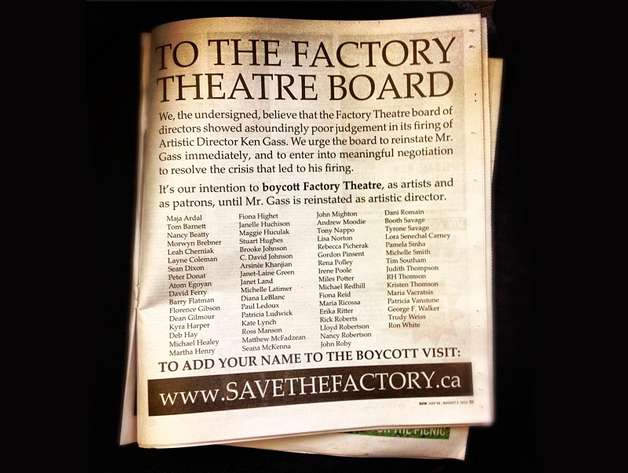
And I think, for that, because I experienced that, my position “you cannot fire that guy that way”, and all of the actions I took that flowed from that position, which is to say writing the boycott letter… my reaction and my response to this is personal, as is yours, and is therefore legitimate.
That’s really all I can say.
The Boycott's full page ad in NOW
Was I hurt and disappointed that every play wasn’t pulled from the season immediately? Yes. Was I hurt and disappointed when there wasn’t a universal outcry and condemnation of the board among theatre artists in this city? I was hurt and surprised in the same way I was hurt and surprised by the Tarragon’s behaviour, in much the same way.
I suddenly felt like I had been making assumptions about something, and that the reality was wildly different from those assumptions.
I think your position is absolutely legitimate. I’m sorry about the way that this has all broken down, I think there are less reasonable people on my side that think the way I do, and less reasonable people on your side as well, and that thanks to them, there is a kind of bizarre rift in our community at the moment.
AISLINN: Well, the challenging thing for me is that I don’t feel like I’m on a particular side. I find the situation to be incredibly complex and probably more complex than the “official sides” are allowing it to be, and so, I feel like I can be “for” Ken, and I can also be “for” Factory Theatre, and all of the people that are still there, and who were incredibly hurt by the notion of The Factory falling apart without Ken, when they had previously felt that they were also important pillars of that organization.
MICHAEL: They absolutely are important pillars of that theatre. I don’t blame anybody for any of the feelings that they had.
My over-simple analysis… and I own the fact it is over-simple, is you can’t fire that guy that way. And all the decisions I’ve made and taken since that moment were based on that. I honestly thought the boycott would be a universal boycott, and that within a matter of weeks Ken would be reinstated, a negotiation about how his exit would be handled would be underway, and that the season would be restored and that nobody would have to lose a job. I lost a job, I was supposed to be in George Walker’s show.
And I’m here to tell you that I’m surprised.
If you want to catch Proud before it closes October 6th, you should get your tickets soon as performances are selling out. Everything you need to know can be found on the Proud website here, or on the box office website here.
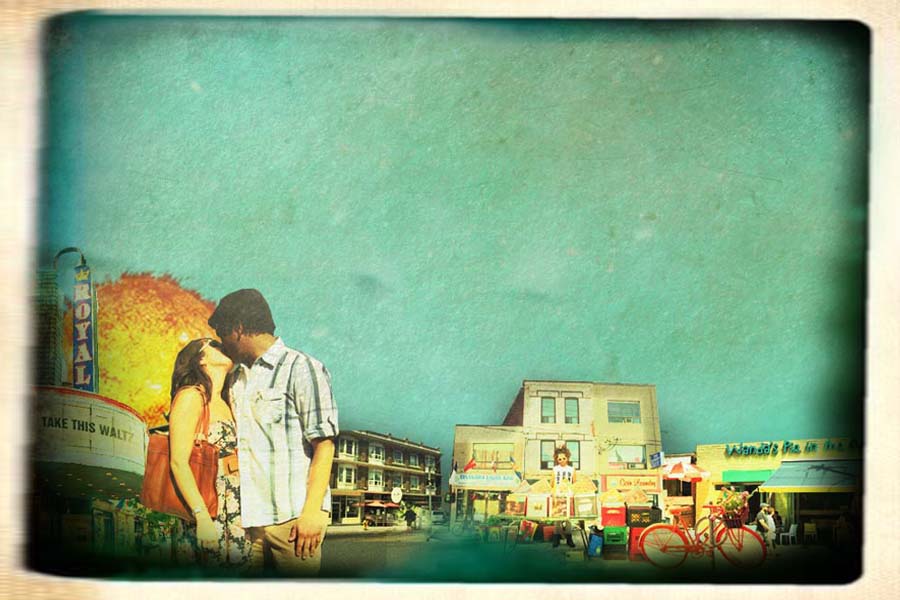
I recently started working as the Community Manager for a project called The Conversation About Love. This interactive experiment revolves around an online art gallery based on the themes of Sarah Polley’s new film, Take This Waltz. Participants are asked to take a tour around the gallery and join the conversation on the topics of love, fidelity, lust and heartbreak. The conversation has taken on many forms including songs, photos, original artwork and personal anecdotes. In addition to the website, conversationalists can also join in via Facebook and twitter.
As someone with a personal and professional interest in this notion of using social media and other online tools in an effort to build community and develop audiences for your work, I was immediately drawn to the project. The big question posed to me was, “how do you feel about chatting and tweeting about love for the next several months?”
Then along came a facebook invitation to a post-show social for Tarragon Theatre’s production of In the Next Room, or the vibrator play, asking participants to submit “stories of sex, love and all the rest of it”. The stories submitted will be read aloud at the event this Thursday evening, but submissions will remain anonymous to protect the not-so-innocent.
I don’t think anyone will be surprised to learn that my first instinct was that this event called for a little live-tweeting. The twist in this case, is that I plan to bring the Take This Waltz-inspired Conversation About Love into the next room, for a joint online conversation about love and sexual awakening.
Want to follow along? Perhaps join in? Here are the facts you need to know:
You can get $10 tickets to see the show this Thursday, October 13th at 8pm. Click here for all the info you need on buying tickets and submitting your tales of love and/or woe. The social after the show is free.
Follow the tweets via www.twitter.com/ConvoAboutLove. You don’t need to be a tweeter to keep tabs on the discussion, but if you are, I’d love for you to follow me in this new experiment. Let me know what you think!
Don’t be shy about submitting your stories. I won’t be tweeting all the sordid details… if you want those you’ll have to join us at the theatre.
Side note: as I finished composing my email to Tarragon suggesting the addition of live-tweeting at their event, I received a message from Tarragon asking if I might like to live-tweet at their event. I’m really excited to see a company like Tarragon embracing these new tools to engage their existing audience in new ways, while reaching out to develop and cultivate a new community of followers and fans.
Hope to see you online or in the theatre on Thursday night!
* Strombo lays it down. I’ll be honest: I don’t watch alot of Strombo – what with him running concurrently at 11pm with the two greatest political satirists of our age – but you gotta hand it to him for this monologue on what will happen to internet access in Canada if the CRTC’s current ruling is implemented, what’s behind it, and how you can get involved on the side of OpenMedia.
*Someone let Richard Florida back in the building! Maybe it’s gauche to link to my own interview – but I just suggested to NOW Magazine’s Jon Kaplan that the best thing about cultural policy in Toronto under Rob Ford was that we finally had an opportunity to move beyondthe widely discredited ‘Creative Economy‘ theories espoused by Richard Florida that gained prominence during the David Miller administration. Guess not: Last week Florida was announced as advisor to a new City Hall panel to update Toronto’s culture plan called The Creative Capital Initiative. Something tells me we might have another ‘cultural renaissance’ on our hands. More on this as it develops – there are some smart people on the panel.
* Canadian Actors’ Equity Association (CAEA) and the Professional Association of Canadian Theatres (PACT) have announced a new trial program geared at creating a reasonable way to contract new play creation. I know, you’re bored already. If you make new plays in Canada don’t be. The Tangerine Contract has the potential to fundamentally change the way you create work – dividing the process into four creation stages and providing the option to work by the hour instead of by the week. More news on this as it develops. Fingers crossed that this trial goes well and that artists, producers, and artist/producers enjoy working under it.
* The Tarragon Theatre opened the Toronto Stock Exchange? Yep it’s true. One good thing about theatre people is that they are very good at clapping.
* Luminato Artistic Director Chris Lorway announced he is stepping down.No word yet on what that means for the festival or what comes next. I for one am bummed about this as Chris was always quite supportive of this website and my work – even though praxistheatre.com gained some of its credibility and noteriety from a series of posts about the high degree of B.S. that led to the creation of Luminato in the first place. Proof that a structural, policy-based debate need not be a personal one.
What makes a video go “viral”? Everyone seems to be giving it a go these days, and Toronto theatre companies are no exception. But are these videos an effective way of selling a show to an audience?
Here are three promo videos of current or upcoming shows in Toronto as examples. What makes a video “forwardable”, and what would make you post a video on Facebook? Has a video like one of these ever propelled you to buy a ticket to a show?
Rob Kempson is the Artistic Producer of the Paprika Festival and on November 28th, the Festival is celebrating its 10th birthday. For the second year now Rob somehow manages to pull together an amazing Festival of new work by young artists. Sure he has help from a stellar executive team, but the guy doesn’t even drink coffee… what gives? Now that’s hot.
Paprika Does Double Digits: November 28th
A collection of work from the past ten years, performed by current participants, artists, alumni and friends of the Festival
Reception at 7pm, performance at 8pm
Tarragon Theatre Mainspace
Limited tickets available, call the Tarragon Box Office at 416.531.1827
The first time they ever let me in a rehearsal room at The Tarragon Theatre was when I was a Script Coordinator during the 2008/09 Season for Alias Godot by Brendan Gall. Two-and-a-half years later, as Director in Training I found myself once again observing a new work by Brendan be brought to the stage during the tech and preview performances of his latest Tarragon play Wide Awake Hearts.
For me the biggest difference between the two experiences was not going to have a smoke every 1.5 hrs as Brendan and I did pretty much like it was our job regardless of weather during Alias Godot. I don’t know if he’s totally off the rockets, but where there was smoking actually, there are now lines in the play about not smoking:
When busted for abandoning his partner “D” played by Maev Beaty, Raoul Bhaneja’s character “C”, explains: “At least I’m not smoking.” “What do you want a medal?”, she replies. “I don’t know. Can you smoke medals?”, he counters.
I always liked that part, even if it made me want to start smoking a bit – or maybe just try to smoke a medal. They gave me one for finishing the half marathon this fall and it would be a beautiful irony if after using running to get off cigarettes, I then got addicted to smoking the medals they give out to runners.
Anyhow, I asked Brendan if we could chat about the processes and experiences of bringing these plays to the stage on G Chat and turn it into a blog post. He said “yes”. This is the (lightly edited) result during which I entirely forgot to ask him about or bring up the smoking thing:
9:03 PM Brendan: There you go.
me: Cool so this works?
9:04 PM Brendan: Yup.
me: Great. I might pause to copy/paste.
Brendan: Got it.
me: Im also a shitty typer
Brendan: I might pause to pour tea.
Or take out my contacts. They’re really bugging me.
me: S’all good. Here we go.
9:05 PM Brendan: K.
me: Before we talk about the rehearsal room, I wonder if there was any major differences in how you approached writing the two plays?
Brendan: The plays themselves? Yeah, definitely.
9:06 PM Alias Godot was pretty freewheeling in terms of structure compared to Wide Awake Hearts.
9:07 PM In AG, other than obeying the basic structure of entrances and exits – ie. Vladimir & Estragon are visited by Pozzo & Lucky once in the middle of the first act and once in the middle of the 2nd act, I pretty much just wrote intuitively.
9:08 PM In WAH, I decided that I wanted to see if I could write using structure as a much stricter principle.
9:09 PM So I wrote out all the possible character/scene combinations for a 4-hander: 4 monologues, 6 dialogues, 4 trialogues & 1 scene with all 4 of them.
Then I tried to figure out some sort of balanced arrangement of these scenes.
9:10 PM I ended up using a sort of palindrome with the 4-hander scene in the middle and the second half mirroring the first. Also, I made a rule that there always had to be one carry-over character from the previous scene, so that someone was always getting ripped away from what they were doing and thrown into the next thing. I figured out that structure before I wrote a word and then stuck to that without fail, even when it was super-annoying.
9:11 PM Also, I misspelled palindrome.
You’re gonna spellcheck this right?
Don’t make me look dumb, Wheeler, or I will burn you to the ground.
9:12 PM Getting tea. Keep typing.
Tony Nappo, David Ferry, Alon Nashman, Geoff Pounsett, and Paul Braunstein in Alias Godot.
me: So when Gord Rand’s character A in Wide Awake Hearts says” he doesn’t write from theme” that was semi-autobiographical in terms of how you approached the play?
9:13 PM
Brendan: Yeah, although we cut that line during previews.
One of the murdered darlings I miss most.
I think it’s still in the published version.
9:15 PM me: I liked that line, but I also thought the play was way better on opening than in previews, so all those little cuts added up to something good. How did you find the process of whittling away in previews differed between Alias and WAH?
9:17 PM Brendan: Well, again, because Alias was so much more “open,” I think it was a lot easier to cut and add willy-nilly (if I can say “willy-nilly”), and I think I initially got quite excited by that, the romantic notion of making changes very quickly, on the fly as it were, and then ultimately found that quite overwhelming.
9:18 PM I think it’s easy with a new work and the writer in the room to default to solving problems with re-writes, and very quickly, but I’m not always sure it’s the best thing to do.
9:19 PM Of course often it’s going to be the script, but sometimes I think even if it IS a problem, it’s maybe a good problem for actors or a director to have.
I think if you get rid of all the problems you can end up with a very smoothly functioning boring play.
I don’t think Alias Godot was boring, but I also am not sure how well it functioned.
I think I just made too many changes ultimately, and lost the plot a little – figuratively and literally.
9:20 PM This time around I was adamant that I not deviate from my design structure, so there were certain things I just wouldn’t do.
9:21 PM If this was the place where A did his monologue, I knew that would always be true. The monologue could change in content and execution, but it always had to exist and its placement could not change. I think those obstructions helped me a great deal.
9:24 PM me: I remember as Script Coordinator that I was very, very busy during previews of Alias giving out copies of Page 46E and the like, things definitely seemed more measured during WAH tech. Do you think you will continue to anchor yourself with structure on the next play you write? What about palindromes? I am partial to palindromes myself. Just a one-off or are their more palindromes in the future?
9:25 PM Brendan: Oh, well, I could never say goodbye to palindromes forever, I would never paint myself into a corner like that. But surely there are other hidden nerdy structures I could adhere to…
I dunno – I’ve always been quite intuitive with writing, but lately I’m starting to think that’s maybe not the best way to be.
9:26 PM I think I will always have to procrastinate before I write, but maybe I will start procrastinating with some prep-work, like figuring out what the hell the thing’s gonna be about.
I should say though, even though I had this structure in WAH, I still didn’t necessarily know what would be accomplished in each scene. I wasn’t that advanced.
I was still writing my way through a series of dark rooms.
I just knew the layout of the building.
Raoul Bhaneja, Maev Beaty, Lesley Faulkner and Gord Rand in Wide Awake Hearts
9:29 PM me: You got your start in The Fringe with A Quiet Place. Now that you’re getting produced by other theatres, what one thing do you wish you knew before you started having your writing produced and developed by other people?
Brendan: Oh man…
9:30 PM me: I had to deliver one non-softball.
Brendan: No, no, keep ’em coming.
I just can’t think of an answer.
9:32 PM me: How about this. What does an aspiring playwright need to do to keep his or her voice intact and get produced by imaginative professionals?
Brendan: I think I wish I had known that sometimes the way to be the best collaborator is to occasionally be absolutely stubborn and unbending about something. Not always, but every once in a while, I think this is very useful.
Right, well there you go.
Don’t show your work to people until you are ready to have it torn apart.
…
Make sure you know what’s important to you and what you’re not sure of.
9:33 PM Let people help you with the latter and don’t let anyone fuck with the former.
I’m still learning how to do that.
Surround yourself with collaborators you trust and trust them.
That sounds contradictory, but I don’t think it is.
You’re a collaborator too.
9:34 PM And sometimes you have to trust yourself.
And I think good casting is 75% of the work.
me: That’s a pretty good list. I have to take a sec to copy/paste so I don’t lose this.
9:35 PM Brendan: I’m not sure of that percentage.
It might be higher.
Possibly as high as 95%.
But really, good actors will carry you to the promised land.
9:36 PM And bad actors will kill you dead.
I’ve been very lucky with that.
me: Yes. As Director in Training this fact has been drummed into me consistently by all parties.
9:37 PM Brendan: Well. It’s true.
There’s that addage: if you take a barrel of sewage and add a teaspoon of wine, you get sewage. Whereas if you take a barrel of wine and add a teaspoon of sewage… you get sewage.
9:38 PM me: Yes, you have been insanely lucky with that. Even A Quiet Place your “Fringe Show” starred Christopher Stanton and James Cade. Excellent addage.
9:39 PM Brendan: Yeah. I’ve also been very lucky to have directors who trusted me, casting-wise. From Pounsett to Richard Rose to Gina, they all trusted me. I don’t think Pounsett even knew who James Cade was at the time. He might not even have known Stanton, I forget.
9:40 PM Likewise, I don’t think Gina really knew Maev’s work, but those two got on like a house on fire.
9:41 PM I just noticed that Google Chat has an “off the record” feature.
Amazing.
9:42 PM me: That’s great to know: Everyone met for the first time somewhere. I think it’s unlikely many directors will be unaware of Maev’s work much longer. Okay this seems good. Do you want to take a pic of yourself with your computer I can use with this? Thanks for being the guinea pig.
For the last 6 weeks, I have not been working as an actress- but rather someone who casts actresses and actors- and I have had my eyes opened wide to the process of finding someone to “fit” a role.. and I want to write the following because I think it needs saying:
Stage actors and actresses are anomalies and jewels – if you have a resume which lists 10 or more theatrical credits in Canadian theatre- you are a national treasure, and you are in a field of a very few. This field is astonishingly smaller than you think. Much smaller.
I know this because I look at Casting Workbook everyday and I receive resumes and headshots… and add to that fact that if you are still active in the theatre after 20 years – YOU ARE A SUCCESS.
I can tell you that I am surprised constantly that resumes are organised with television and film credits first – as if they have more importance than what work you have done on the stage- who decided that?
I can tell you that if you do not celebrate your own accomplishments on the stage – then no one else will either.
I want to know how and why it was decided that holding stage credits up against hollywood credits was interpreted as success.
REALLY? DO YOU BELIEVE THAT?
I think that to be successful as an artist: is to despite all the odds; to keep on keepin on … and furthermore to be successful in this craft is to be the HEART of a human being , foibles, flaws, charms and vulnerabilities all – a believable human being in a vastly different set of circumstances/ genres/ stories.
THE END.
If you have a theatre resume, be proud, be so proud because despite all the odds and rejections and POVERTY… despite the pressure of the film/television world, YOU HAVE CONTINUED… and if you are a woman over 40, you have infinitely beat the odds-
Yes film is a visual medium and because its run mostly on the whims of adolescents in North America there is a pressure to look a certain way… but for real artists and grown ups- we are looking for your craft and for your soul and that is something YOU and your HEART and your experience of life brings.
So stop where you are and dont compare yourself or covet what you see as beyond you.
Luxuriate in what you have done, live your life as an extraordinarily lucky person, celebrate yourself, dare to change your resume to show theatre first.
The theatre is something to be proud of in this vast country because the professional theatre is arguably only 60 years old here. The blood, sweat and tears that have made it have come with blind faith and no money – The victories and the magic that happens – is yours, all yours.
Theatre was and will continue to be the reliable source of talent that goes into all the film and television that is made- not just here – but in many other countries in the world. I mean think about Broadway or the West End and how people use it to prove their legitimacy as “serious artists”. Please celebrate the theatre what you have given to its continuance. You are a gift, your craft is a gift, you have a “noble” calling , your numbers are few, and its time that you were celebrated. So I write this to celebrate you all.
You can all join my “agency” anytime, the door is open, the coffee and tea is always on, the table has food and a box of tissue, there are books for your souls and poetry for your heart, there are plays that will build beautiful new worlds, and there is a dram of something for courage when needed, and always a smile, a laugh and a story to remind you: you are loved and you are not alone, never alone.
I will fight for each and everyone of you to hold your heads high.. I raise my glass to you, I salute you and thank you for the courage of your hearts which has brought beauty, laughter, eye opening – consciousness raising challenges and pure love to mine..
Here’s to you: You agents of provocativeness and charm, you Socratic questions all…
xxx
Kristina Nicoll is Assistant Artistic Director of the Tarragon Theatre. She originally wrote this piece as a Facebook note to her friends.
While Praxis Theatre became super-obsessed with our own product and process for a week, lots of other things have been going on:
HIVE 3 has been rocking Vancouver as the theatrical grand finale to the grand funding opus known as The Cultural Olympiad. Simon Ogden of The Next Stage has some interesting thoughts on what the event means for Vancouver and building and attracting new audiences by re-branding theatre.
In Toronto, Tarragon, Factory, and Canadian Stage all announced their seasons in quick succession in a bid to spare their subscribers the added cost of HST if purchased before April 30th. Buddies in Bad Times has made some hints about the first season curated by Artistic Director Brendan Healy, stating the new season, “will reflect a renewed engagement with Buddies’ social and political roots.” Luminato also officially announced the theatrical components of this year’s festival.
Roy McGregor wrote a very interesting piece in The Globe and Mail about the often skewed relationship between “hits” and good journalism as the world of information gets all 2.0 and hit-count-y.
Speaking of interactive theatre…. Check out this awesome show that’s gaining steam Down Under. If this is half as cool as the article makes it out to be I want my ticket yesterday.
Finally, The Theatre Centre’s annual Free Fall runs March 18th – 28th. Included in the festival is a show that occurs in the shared office space Praxis rents at The Great Hall, but is being used briefly by One Reed Theatre (who also rent a desk in the office) as a mini-theatre for their show.
Throughout 2010 I will be engaged in a Director in Training program at TheTarragon Theatre funded by The Canada Council for the Arts. The premise of this program is that although I have significant experience directing theatre in festivals or site specific locations, I am still lacking in some key skill sets – namely how to tech a show and work with designers in a full professional production that has multiple days of tech and several previews.
Basically the program should teach me how to direct a show with a real budget in a big theatre. I have been an assistant director or script coordinator on a number of large budget shows, but the focus has always been on the process in the rehearsal room. At this point the other half of a director’s job is what I really need to bone up on, and I am thrilled (and a little incredulous frankly) that I have been presented with this opportunity.
As anyone who has ever done a fringe show knows – design elements are difficult to prioritize in indie theatre: Often festival productions have one “special” – a light designated just for the use of a particular show. Sets must be kept simple in order to be loaded on and off stage in under 15 minutes. Sound design must be kept basic in order to be programmed along with all your lighting cues in under three hours.
Site-specific work offers more freedom but comes with new obstacles: Power supply for lighting instruments is always an issue as is the ability to hang them without a grid. Sets must often be built inside the venue to fit though human-sized doorways. A lot of time gets burnt on how and where people will sit. Insurance, washrooms, fire exits come up time and again too. Design elements always seem to move to the end of the list.
To bring me up to speed on how the established theatre world has been working with design while I have been making-it-up-as-I-go for the past seven years, I will be investigating and learning about the design and technical elements at theatres across the country and at The Tarragon Theatre. Sometimes my travels take me along with Tarragon Theatre Artistic Director Richard Rose, and sometimes I’ve been lucky enough to be included by other companies.
The goal of the program is to give me the knowledge and understanding to direct a play at any theatre regardless of scale or budget. As editor of a website about indie theatre I would be remiss if I didn’t write about all of this, so starting next week start looking for posts on the topic, starting with Tear The Curtain a project The Electric Company has been commissioned by The Arts Club to premiere at The Stanley Theatre in Vancouver – aka the most technically ambitious production I’m aware of a Canadian indie company ever attempting – so it will be a great place to start!
“After the years and years of weaker and waterier imitations, we now find ourselves rejecting the very notion of a holy stage. It is not the fault of the holy that it has become a middle-class weapon to keep the children good.”



 Rob Kempson is the Artistic Producer of the Paprika Festival and on November 28th, the Festival is celebrating its 10th birthday. For the second year now Rob somehow manages to pull together an amazing Festival of new work by young artists. Sure he has help from a stellar executive team, but the guy doesn’t even drink coffee… what gives? Now that’s hot.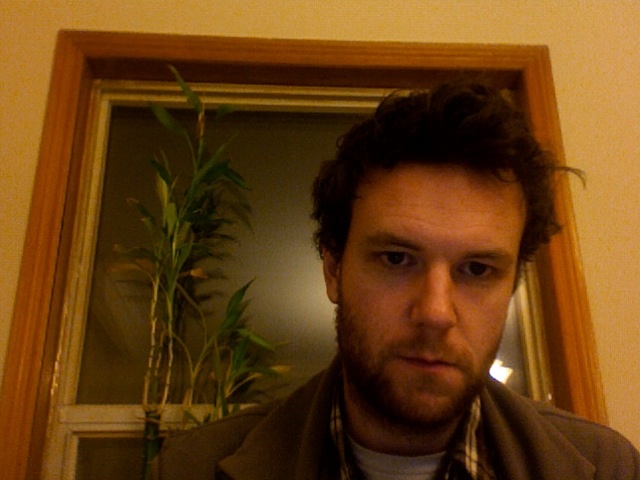




Recent Comments